
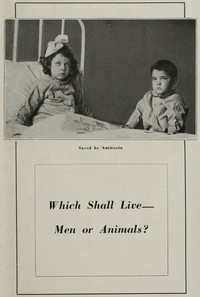
Which Shall Live—Men or Animals?
Written by Ernest Harold Baynes
Chaptra reads alongside you — AI insights, chapter breakdowns and reader discussions for every book. Join free
About this book
Reading guide
Themes, characters and key ideas in Which Shall Live—Men or Animals?, written by Chaptra AI.
- about 6 hours
- advanced
- serious
- argumentative
- informative
Ernest Harold Baynes's early 20th-century publication, "Which Shall Live—Men or Animals?", serves as a robust defense of vivisection, advocating for the necessity of animal experimentation in advancing human medical science. The book directly confronts the burgeoning antivivisection movement, arguing that significant breakthroughs in treating diseases like bubonic plague and diabetes, and the development of life-saving vaccines, were unequivocally reliant on animal research. Baynes meticulously outlines the practical and ethical dilemmas inherent in balancing human welfare with animal rights, ultimately positing that human lives and medical progress must take precedence. He critiques what he perceives as extremist views and misconceptions propagated by opponents of vivisection, asserting their potential to impede scientific advancement and jeopardize public health. Ultimately, the work champions the scientific method and its ethical application of animal studies for the greater good of humanity.
“The choice before humanity is stark: to sacrifice animal lives for the alleviation of human suffering, or to impede medical progress and condemn countless men, women, and children to preventable disease and death.”
Key themes
- Ethics of Animal Experimentation
- This is the central theme, exploring the moral permissibility of using animals for scientific research, particularly when it causes suffering or death, for the benefit of human health. Baynes argues that the ethical imperative to save human lives outweighs the moral considerations for individual animal lives in this context.
- Medical Progress and Human Welfare
- This theme underscores the critical role of scientific research, especially animal experimentation, in advancing medical knowledge and improving human health. Baynes positions medical progress as a paramount societal good, directly linking it to the practice of vivisection.
- Science vs. Sentimentality
- Baynes frames the debate as a conflict between rational, empirical scientific inquiry and what he perceives as emotional, unscientific sentimentality from the antivivisection movement. He argues that allowing sentiment to dictate scientific practice is dangerous and irrational.
Worth discussing
How does Baynes frame the ethical dilemma of 'men or animals,' and to what extent does this framing still resonate or differ from contemporary ethical discussions?
Chapter-by-chapter breakdowns, character arcs and the full thematic analysis come with a free account.
Discussions
No one has started one yet
Questions this book opens up
No discussions yet
Be the first to start a discussion about this book!
Sign up to start the discussionReviews
No reviews yet
Be the first to review this book!