
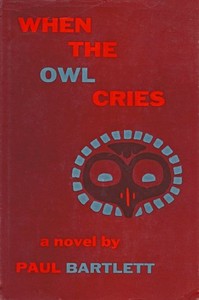
When the Owl Cries
Written by Paul Alexander Bartlett
Chaptra reads alongside you — AI insights, chapter breakdowns and reader discussions for every book. Join free
About this book
Reading guide
Themes, characters and key ideas in When the Owl Cries, written by Chaptra AI.
- about 10 hours
- intermediate
- historical
- dramatic
- conflicted
Set against the volatile backdrop of the 1910 Mexican Revolution, Paul Alexander Bartlett's "When the Owl Cries" is a compelling saga centered on Raul Medina, heir to the sprawling hacienda Petaca. Raul grapples with the oppressive legacy of his father and the urgent need for social reform amidst brewing societal unrest and ancient superstitions. His personal life is equally tumultuous, marked by a complex marriage to Angelina and a passionate affair with Lucienne, a neighboring hacendada. As Raul prepares to confront his father and usher in a new era for Petaca's workers, the novel intricately weaves a tale of power, justice, and love, reflecting a nation on the cusp of profound change.
“"The owl's cry is not merely a sound in the night; it is a whisper of the earth, a warning of the changes that come, whether we are ready or not."”
Key themes
- Social Change and Revolution
- Set during the Mexican Revolution, this is a central theme examining the causes, impacts, and human cost of revolutionary change. The novel portrays the brewing discontent among the working class and the societal shifts that challenge established hierarchies. It explores how individuals react to and participate in movements that seek to fundamentally alter the social and political landscape.
- Power and Legacy
- The novel deeply explores the nature of inherited power and the burden of legacy. Raul struggles with the oppressive, exploitative legacy of his father's management of Petaca, desiring to break free from it and establish a new, more equitable form of authority. This theme questions how power is maintained, challenged, and transformed across generations and during periods of social upheaval.
- Family Dynamics and Duty
- The intricate relationships within the Medina family, particularly between Raul and his father, and Raul and his wife Angelina, form a core thematic exploration. It delves into the conflict between personal desires and familial obligations, the weight of expectation, and the struggle to define one's own path within a family's history and social standing.
Worth discussing
How does Raul's personal struggle with his father's legacy mirror the larger struggle of Mexico during the Revolution?
Chapter-by-chapter breakdowns, character arcs and the full thematic analysis come with a free account.
Discussions
No one has started one yet
Questions this book opens up
No discussions yet
Be the first to start a discussion about this book!
Sign up to start the discussionReviews
No reviews yet
Be the first to review this book!