
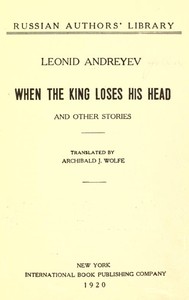
When the King Loses His Head, and Other Stories
Written by Leonid Andreyev
Chaptra reads alongside you — AI insights, chapter breakdowns and reader discussions for every book. Join free
About this book
Reading guide
Themes, characters and key ideas in When the King Loses His Head, and Other Stories, written by Chaptra AI.
- about 10 hours
- advanced
- dark
- philosophical
- psychological
Leonid Andreyev's "When the King Loses His Head, and Other Stories" is a collection of psychologically intense and philosophically charged short stories that delve into the darker aspects of the human condition. Through a blend of realism, symbolism, and nascent expressionism, Andreyev explores themes of existential dread, the absurdity of life, madness, human cruelty, and the fragility of societal order. The titular story, often seen as a political allegory, sets a tone of impending chaos and the breakdown of authority, echoed in various forms across the other narratives. The collection is a testament to Andreyev's unique voice in Russian literature, marking him as a precursor to modernist and existentialist thought.
“"Man is a slave because he does not know how to think."”
Key themes
- Existential Dread and the Absurdity of Life
- Andreyev frequently portrays characters grappling with the meaninglessness of existence, the arbitrary nature of fate, and the terrifying freedom of a world without inherent purpose. The stories often highlight the absurdity of human endeavors and the futility of seeking ultimate truths.
- Madness and Psychological Extremes
- Andreyev frequently delves into the darkest corners of the human psyche, exploring states of paranoia, obsession, delusion, and the descent into madness. He often blurs the line between external reality and internal perception, showing how the mind can create its own terrifying truths.
- The Fragility of Order and the Breakdown of Authority
- Many stories, most notably the titular one, explore how quickly established social structures, political power, and even individual sanity can unravel. Andreyev examines the thin veneer of civilization and the ease with which chaos, irrationality, and primal instincts can emerge.
Worth discussing
How does Andreyev use the absurd or the grotesque to explore deeper truths about human nature and society?
Chapter-by-chapter breakdowns, character arcs and the full thematic analysis come with a free account.
Discussions
No one has started one yet
Questions this book opens up
No discussions yet
Be the first to start a discussion about this book!
Sign up to start the discussionReviews
No reviews yet
Be the first to review this book!