
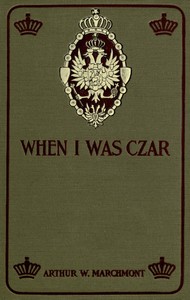
When I Was Czar
Written by Arthur W. Marchmont
Chaptra reads alongside you — AI insights, chapter breakdowns and reader discussions for every book. Join free
About this book
Reading guide
Themes, characters and key ideas in When I Was Czar, written by Chaptra AI.
- about 9 hours
- intermediate
- mysterious
- romantic
- adventurous
Arthur W. Marchmont's "When I Was Czar" is an early 20th-century romance and adventure novel set in the opulent yet dangerous Russian Empire. The story follows Harper C. Denver, an American whose uncanny resemblance to the Czar leads him into a perilous scheme orchestrated by Prince Kalkov. Tasked with impersonating the monarch to foil the plots of the villainous Boreski and his entanglement with Duchess Stephanie, Harper finds himself navigating a complex web of political intrigue and deception. Driven by a past debt to the Czar, he embraces this extraordinary challenge, all while grappling with a burgeoning attraction to the enigmatic Helga, setting the stage for a thrilling blend of duty, danger, and burgeoning romance.
“To wear the crown, even in jest, is to feel the crushing weight of an empire's fate.”
Key themes
- Identity and Impersonation
- The central theme revolves around Harper C. Denver assuming the identity of the Czar. This explores how external roles can challenge or shape one's inner self, blurring the lines between who one is and who one pretends to be. It examines the psychological toll and moral implications of living a lie, even for a noble cause.
- Duty vs. Desire
- This theme explores the conflict between Harper's obligation to the Czar (to repay a life debt and protect the empire) and his personal desires, particularly his growing attraction to Helga. It highlights the sacrifices required by duty and the emotional challenges of balancing personal happiness with grander responsibilities.
- Political Intrigue and Deception
- The novel is steeped in the machinations of court politics, secret plots, and the pervasive use of deception. It portrays a world where power is constantly contested, and trust is a rare commodity. The theme explores the methods and consequences of political maneuvering, from Boreski's dangerous schemes to Kalkov's calculated counter-plot.
Worth discussing
How does Harper's initial motivation to repay a debt evolve throughout his impersonation of the Czar?
Chapter-by-chapter breakdowns, character arcs and the full thematic analysis come with a free account.
Discussions
No one has started one yet
Questions this book opens up
No discussions yet
Be the first to start a discussion about this book!
Sign up to start the discussionReviews
No reviews yet
Be the first to review this book!