
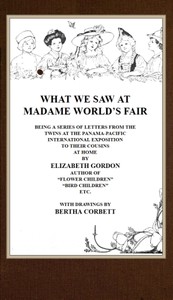
What We Saw at Madame World's Fair: Being a Series of Letters from the Twins at the Panama-Pacific International Exposition to Their Cousins at Home
Written by Elizabeth Gordon
Chaptra reads alongside you — AI insights, chapter breakdowns and reader discussions for every book. Join free
About this book
Reading guide
Themes, characters and key ideas in What We Saw at Madame World's Fair: Being a Series of Letters from the Twins at the Panama-Pacific International Exposition to Their Cousins at Home, written by Chaptra AI.
- about 3 hours
- beginner
- uplifting
- educational
- curious
What We Saw at Madame World's Fair" by Elizabeth Gordon is a charming early 20th-century children's book, presented as a series of letters from twin sisters, Jane and Ellen. They vividly recount their experiences at the Panama-Pacific International Exposition in San Francisco, sharing their wonder and excitement with their cousins at home. The narrative captures their exploration of diverse cultural and industrial pavilions, celebrating global contributions and the monumental completion of the Panama Canal. Through their innocent perspectives, the book fosters a sense of adventure, cultural understanding, and the joy of discovery, making a significant historical event accessible and engaging for young readers. It serves as both an educational tool and a delightful glimpse into a bygone era.
“Oh, dear Cousins, you simply wouldn't believe the sights we've seen today! The whole world is here!”
Key themes
- Cultural Understanding and Exchange
- Explicitly highlighted in the book's premise, this theme underscores the fair's purpose in bringing diverse cultures together and the twins' innocent yet profound appreciation for global contributions. It champions the idea of a shared humanity, mutual respect, and the richness derived from inter-cultural interaction.
- Exploration and Discovery
- The book is fundamentally centered on the act of exploring a grand new world—the Panama-Pacific International Exposition—and the profound joy of discovering new sights, sounds, and ideas. The twins' letters are brimming with their enthusiastic accounts of venturing into diverse pavilions and encountering the unknown, transforming the fair into a landscape of endless discovery.
- Childhood Wonder and Innocence
- The entire narrative is filtered through the fresh, unjaded eyes of young twins, Jane and Ellen. Their perspective amplifies the magic and excitement of the fair, emphasizing simple joys, vivid sensory experiences, and an uncomplicated, pure appreciation for beauty, novelty, and the sheer scale of the event.
Worth discussing
How does the epistolary format (letters) enhance or limit the storytelling in this book?
Chapter-by-chapter breakdowns, character arcs and the full thematic analysis come with a free account.
Discussions
No one has started one yet
Questions this book opens up
No discussions yet
Be the first to start a discussion about this book!
Sign up to start the discussionReviews
No reviews yet
Be the first to review this book!