
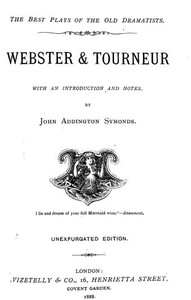
Webster & Tourneur
Written by John Webster,Cyril Tourneur
Chaptra reads alongside you — AI insights, chapter breakdowns and reader discussions for every book. Join free
About this book
Reading guide
Themes, characters and key ideas in Webster & Tourneur, written by Chaptra AI.
- about 20 hours
- advanced
- dark
- tragic
- intense
This collection, "Webster & Tourneur," compiles seminal Jacobean revenge tragedies, primarily featuring John Webster's "The White Devil" and "The Duchess of Malfi," alongside Cyril Tourneur's "The Atheist's Tragedy" and "The Revenger's Tragedy." These plays delve into a dark world of moral corruption, ambition, and relentless vengeance, often culminating in spectacular and bloody downfalls. The edition provides crucial historical context regarding the Globe Theatre and the playwrights' techniques, highlighting their contributions to the 'Tragedy of Blood' genre. It explores complex psychological landscapes, where characters grapple with jealousy, betrayal, and the consequences of their morally ambiguous choices, offering a profound and often cynical commentary on human nature and societal decay.
“I am Duchess of Malfi still.”
Key themes
- Revenge and Justice
- Revenge is the central driving force in most of these plays, often presented as a convoluted, self-perpetuating cycle rather than a clear path to justice. Characters are consumed by the desire for retribution, leading to increasingly elaborate and violent schemes that blur the lines between victim and perpetrator. The plays question the efficacy and morality of personal vengeance, often demonstrating how it corrupts the avenger and leads to widespread destruction.
- Moral Corruption and Decadence
- The plays vividly portray a society steeped in moral decay, particularly within aristocratic courts. Characters are driven by lust, greed, ambition, and envy, leading to a pervasive atmosphere of deceit, betrayal, and murder. Corruption is not merely individual but institutional, infecting the highest echelons of power and creating a world where virtue is often punished and vice rewarded.
- Ambition and Power
- Ambition is a powerful, often destructive, motivator for many characters. It drives them to commit heinous acts, betray loved ones, and sacrifice their morality for social advancement, political influence, or personal gain. The plays illustrate how the pursuit of power can corrupt the soul and lead to isolation and ultimate downfall, regardless of initial intentions.
Worth discussing
How do Webster and Tourneur use violence, both physical and psychological, to achieve their dramatic and thematic goals?
Chapter-by-chapter breakdowns, character arcs and the full thematic analysis come with a free account.
Discussions
No one has started one yet
Questions this book opens up
No discussions yet
Be the first to start a discussion about this book!
Sign up to start the discussionReviews
No reviews yet
Be the first to review this book!