
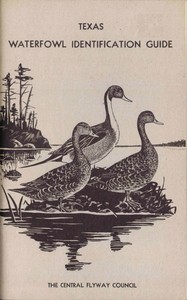
Waterfowl Identification Guide
Written by Central Flyway Council
Chaptra reads alongside you — AI insights, chapter breakdowns and reader discussions for every book. Join free
About this book
Reading guide
Themes, characters and key ideas in Waterfowl Identification Guide, written by Chaptra AI.
- about 15 hours
- intermediate
- informative
- educational
- practical
The 'Waterfowl Identification Guide' by the Central Flyway Council is a highly specialized, non-fiction field guide designed to assist individuals in accurately identifying various species of waterfowl found within the Central Flyway region. It serves as an essential resource for hunters, wildlife managers, birdwatchers, and conservationists, providing detailed descriptions, distinguishing characteristics, and visual aids for proper species recognition. The guide aims to promote responsible outdoor practices and aid in data collection for waterfowl population management by ensuring correct identification. Its primary purpose is educational and practical, focusing on scientific accuracy and clarity.
“Note the distinct white speculum visible in flight.”
Key themes
- Observation and Classification
- The guide fundamentally emphasizes the meticulous observation of physical characteristics, behaviors, and habitats as the basis for accurate scientific classification. It trains the user to notice subtle distinctions crucial for differentiating between similar species. This theme underscores the scientific method applied to ornithology.
- Conservation and Stewardship
- While not explicitly a narrative, the underlying purpose of the guide is deeply rooted in conservation. Accurate identification is a prerequisite for effective wildlife management, population monitoring, and the enforcement of hunting regulations, all of which contribute to the long-term health and sustainability of waterfowl populations. It implicitly encourages responsible engagement with nature.
- Regional Specificity and Ecological Interconnectedness
- By focusing on the 'Central Flyway,' the guide highlights the unique ecological characteristics and migratory patterns of a specific geographic region. This specificity underscores how local environmental factors influence species distribution and behavior, and how different species within an ecosystem are interconnected through shared habitats and migratory routes.
Worth discussing
How does accurate waterfowl identification contribute to conservation efforts and wildlife management?
Chapter-by-chapter breakdowns, character arcs and the full thematic analysis come with a free account.
Discussions
No one has started one yet
Questions this book opens up
No discussions yet
Be the first to start a discussion about this book!
Sign up to start the discussionReviews
No reviews yet
Be the first to review this book!