
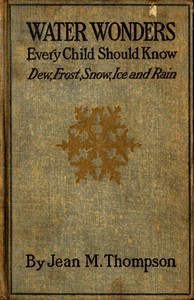
Water Wonders Every Child Should Know: Little Studies of Dew, Frost, Snow, Ice, and Rain
Written by Jean M. (Jean May) Thompson
Chaptra reads alongside you — AI insights, chapter breakdowns and reader discussions for every book. Join free
About this book
Reading guide
Themes, characters and key ideas in Water Wonders Every Child Should Know: Little Studies of Dew, Frost, Snow, Ice, and Rain, written by Chaptra AI.
- about 8 hours
- beginner
- Educational
- Wondrous
- Gentle
Jean M. Thompson's "Water Wonders Every Child Should Know" is a charming early 20th-century nature study designed to introduce young readers to the diverse forms and beauty of water. Through engaging, poetic language, the book explores phenomena such as dew, frost, snow, ice, and rain, explaining their scientific formation while emphasizing their aesthetic and ecological significance. Complemented by exquisite illustrations from Wilson A. Bentley, the work aims to cultivate a sense of wonder and appreciation for the natural world. It serves as both an educational text and a celebration of the everyday magic found in the hydrological cycle, inviting children to observe their surroundings with curiosity and awe.
“Each morning, the world awakens to a sparkling display, painted anew by the gentle hand of dew.”
Key themes
- The Wonders and Beauty of Nature
- This is the overarching theme, as the book explicitly aims to showcase the 'wonders' of water. Thompson highlights the aesthetic appeal of dew, the intricate patterns of frost and snow, and the life-giving properties of rain, encouraging readers to find beauty in everyday natural phenomena.
- Scientific Observation and Understanding
- Beyond mere description, the book provides foundational scientific explanations for how dew, frost, snow, ice, and rain form. It aims to educate children about the natural processes behind these phenomena, encouraging a scientific mindset of inquiry and understanding.
- Cultivating Wonder and Appreciation
- A core goal of the book is to instill a 'sense of wonder and appreciation' in young readers. Through poetic language and enchanting descriptions, Thompson aims to transform ordinary observations into extraordinary experiences, fostering a lifelong curiosity and respect for the natural world.
Worth discussing
How does Thompson's use of poetic language make scientific concepts more engaging for children?
Chapter-by-chapter breakdowns, character arcs and the full thematic analysis come with a free account.
Discussions
No one has started one yet
Questions this book opens up
No discussions yet
Be the first to start a discussion about this book!
Sign up to start the discussionReviews
No reviews yet
Be the first to review this book!