
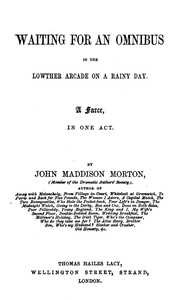
Waiting for an Omnibus in the Lowther Arcade on a Rainy Day: A Farce, in One Act
Written by John Maddison Morton
Chaptra reads alongside you — AI insights, chapter breakdowns and reader discussions for every book. Join free
About this book
Reading guide
Themes, characters and key ideas in Waiting for an Omnibus in the Lowther Arcade on a Rainy Day: A Farce, in One Act, written by Chaptra AI.
- about 8 hours
- beginner
- humorous
- lighthearted
- chaotic
John Maddison Morton's "Waiting for an Omnibus in the Lowther Arcade on a Rainy Day" is a lively one-act Victorian farce set amidst the bustling atmosphere of a London arcade during a rainstorm. The play follows John Horatio O'Walker, a man on the cusp of marriage to Fanny, as his day descends into comedic chaos. His anxieties over finances, a potentially absconding advisor named Dibbs, and the unexpected resurfacing of letters from a past love interweave with a series of misunderstandings involving his fiancée, her mother, and a host of eccentric characters. Through witty dialogue and rapid-fire plot twists, the farce humorously explores the social pressures of marriage, the pitfalls of finance, and the absurdities inherent in everyday human interactions, culminating in a swift and satisfying resolution.
“"A deluge! A positive deluge! And here am I, a man on the brink of matrimony, on the brink of financial ruin!"”
Key themes
- Misunderstanding & Communication Breakdown
- This is the core engine of the farce. The play thrives on characters' inability or unwillingness to communicate clearly, leading to a cascade of humorous misinterpretations. O'Walker's vague explanations, combined with the other characters' assumptions, drive the entire plot.
- Social Pressures & Marriage
- The impending marriage between O'Walker and Fanny serves as the central framework against which all the comedic complications unfold. The play highlights the societal expectations surrounding marriage in the Victorian era, particularly concerning financial stability and reputation.
- The Absurdity of Everyday Life
- At its heart, farce often exaggerates the mundane to reveal its inherent ridiculousness. The play takes a common situation – waiting out a rainstorm – and transforms it into a stage for escalating, improbable, and utterly hilarious human behavior. It finds humor in the small anxieties and coincidences that can derail a perfectly normal day.
Worth discussing
How does the setting of the Lowther Arcade contribute to the comedic elements and the overall atmosphere of the play?
Chapter-by-chapter breakdowns, character arcs and the full thematic analysis come with a free account.
Discussions
No one has started one yet
Questions this book opens up
No discussions yet
Be the first to start a discussion about this book!
Sign up to start the discussionReviews
No reviews yet
Be the first to review this book!