
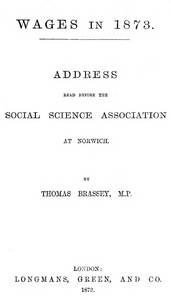
Wages in 1873: Address read before the Social Science Association at Norwich
Written by Thomas Brassey Brassey
Chaptra reads alongside you — AI insights, chapter breakdowns and reader discussions for every book. Join free
About this book
Reading guide
Themes, characters and key ideas in Wages in 1873: Address read before the Social Science Association at Norwich, written by Chaptra AI.
- about 8 hours
- advanced
- informative
- analytical
- serious
Thomas Brassey's "Wages in 1873" is a significant historical address dissecting the contemporary rise in wages within late 19th-century England. Brassey, an M.P. and employer, argues that increased demand stemming from industrial growth, rather than successful strikes or union negotiations, is the primary driver of wage increases. He critically examines the failure of the South Wales miners' strike, asserting that employers can withstand labor actions under unfavorable economic conditions. The address further explores the economic implications of rising coal costs and shorter work hours, advocating for enhanced productivity and worker cooperation as more effective long-term strategies for securing better wages than confrontational strikes.
“The rise in wages is predominantly due to the increased demand for labor following a period of industrial growth, rather than the result of successful strikes or union negotiations.”
Key themes
- Labor Economics & Wage Determination
- This is the central theme, exploring the factors that influence wages in a rapidly industrializing economy. Brassey argues for the primacy of supply and demand (specifically, increased demand for labor) over other factors like union action. He examines the economic principles governing wage increases and their sustainability.
- Industrial Relations & Conflict vs. Cooperation
- The theme delves into the dynamics between employers and employees, particularly concerning industrial disputes. Brassey critiques strikes as often ineffective and advocates for more cooperative and economically informed approaches, such as increased productivity and worker cooperatives.
- Role and Efficacy of Labor Unions
- Brassey critically assesses the influence of labor unions, arguing that their power to raise wages through strikes is often overestimated, especially when economic conditions are not favorable. He positions unions as potentially disruptive rather than primary drivers of sustainable wage growth.
Worth discussing
How effectively does Brassey argue that increased demand, rather than strikes, is the primary driver of wage increases? What evidence does he present, and what might be missing?
Chapter-by-chapter breakdowns, character arcs and the full thematic analysis come with a free account.
Discussions
No one has started one yet
Questions this book opens up
No discussions yet
Be the first to start a discussion about this book!
Sign up to start the discussionReviews
No reviews yet
Be the first to review this book!