
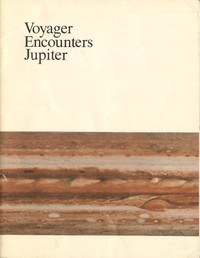
Voyager Encounters Jupiter
Written by United States. National Aeronautics and Space Administration
Chaptra reads alongside you — AI insights, chapter breakdowns and reader discussions for every book. Join free
About this book
Reading guide
Themes, characters and key ideas in Voyager Encounters Jupiter, written by Chaptra AI.
- about 12 hours
- intermediate
- informative
- awe-inspiring
- groundbreaking
"Voyager Encounters Jupiter" is a seminal scientific publication by NASA, documenting the groundbreaking findings of the Voyager spacecraft mission during its late 1970s flyby of Jupiter. This work serves as a comprehensive catalog of the mission's initial discoveries, detailing Jupiter's complex atmosphere, its iconic Great Red Spot, and the diverse characteristics of its major moons: Io, Europa, Ganymede, and Callisto. It illuminates phenomena such as Io's volcanism and Europa's potential subsurface ocean, profoundly expanding humanity's understanding of the outer solar system. The book captures the optimistic and innovative spirit of its era, reflecting a pivotal moment in space exploration and scientific inquiry.
“The Voyager mission provided humanity's first detailed look at the outer solar system, revolutionizing our understanding of gas giants and their moons.”
Key themes
- Scientific Discovery and the Pursuit of Knowledge
- This theme is the bedrock of the publication, celebrating the process of scientific inquiry, data collection, and the unveiling of new truths about the universe. It highlights how systematic observation and analysis can expand humanity's understanding beyond previous limits.
- Human Curiosity and the Spirit of Exploration
- The book embodies the fundamental human drive to explore the unknown, to venture beyond perceived boundaries, and to understand our place in the cosmos. It's a testament to the collective human will to reach out into space.
- The Vastness and Complexity of the Cosmos
- Through detailed descriptions and images, the book immerses the reader in the immense scale and intricate workings of the Jovian system, fostering a sense of awe and wonder at the universe's grandeur and the unexpected diversity of celestial bodies.
Worth discussing
What impact did the Voyager mission have on public perception and scientific understanding of the solar system?
Chapter-by-chapter breakdowns, character arcs and the full thematic analysis come with a free account.
Discussions
No one has started one yet
Questions this book opens up
No discussions yet
Be the first to start a discussion about this book!
Sign up to start the discussionReviews
No reviews yet
Be the first to review this book!