
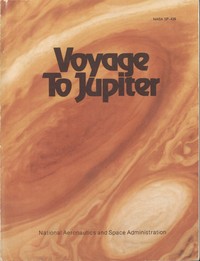
Voyage to Jupiter
Written by David Morrison,Jane Samz
Chaptra reads alongside you — AI insights, chapter breakdowns and reader discussions for every book. Join free
About this book
Reading guide
Themes, characters and key ideas in Voyage to Jupiter, written by Chaptra AI.
- about 10 hours
- intermediate
- informative
- awe-inspiring
- scientific
Voyage to Jupiter by David Morrison and Jane Samz is a late 20th-century scientific publication meticulously detailing the groundbreaking Voyager missions to Jupiter. The book offers a comprehensive chronological account, from the extensive planning and technological advancements to the execution of the flybys and the subsequent processing of scientific data. It illuminates the monumental human collaboration involved and the unexpected discoveries made regarding Jupiter's atmosphere, its diverse satellites, and the complex dynamics of its magnetosphere. Through a blend of scientific rigor and an engaging narrative, the authors convey the awe and excitement that characterized this pivotal era of space exploration, establishing the book as a vital record of humanity's initial close-up encounters with the Jovian system.
“The data pouring in from Voyager exceeded our wildest expectations, rewriting textbooks almost daily.”
Key themes
- Scientific Discovery and Exploration
- This theme is the bedrock of the book, detailing the pursuit of knowledge for its own sake and the thrill of uncovering the universe's secrets. It encompasses the scientific method, the formulation of hypotheses, and the interpretation of empirical data to expand human understanding.
- Human Endeavor and Collaboration
- The book heavily emphasizes the collaborative spirit and immense human effort—from scientists and engineers to technicians and administrators—required to conceive, plan, execute, and analyze missions of this scale. It highlights teamwork, perseverance, and shared vision.
- Technological Advancement
- This theme explores the cutting-edge technology of the late 20th century that enabled the Voyager missions. It delves into the design of the spacecraft, its instruments, communication systems, and the data processing capabilities that were revolutionary for their time.
Worth discussing
What were the most significant scientific discoveries made during the Voyager missions to Jupiter, as detailed in the book?
Chapter-by-chapter breakdowns, character arcs and the full thematic analysis come with a free account.
Discussions
No one has started one yet
Questions this book opens up
No discussions yet
Be the first to start a discussion about this book!
Sign up to start the discussionReviews
No reviews yet
Be the first to review this book!