
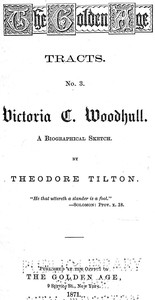
Victoria C. Woodhull: A Biographical Sketch
Written by Theodore Tilton
Chaptra reads alongside you — AI insights, chapter breakdowns and reader discussions for every book. Join free
About this book
Reading guide
Themes, characters and key ideas in Victoria C. Woodhull: A Biographical Sketch, written by Chaptra AI.
- about 8 hours
- intermediate
- inspirational
- historical
- defiant
Theodore Tilton's "Victoria C. Woodhull: A Biographical Sketch" is an early 1870s account chronicling the extraordinary life of Victoria Woodhull, a pioneering social reformer, spiritualist, and radical advocate for women's rights. The biography details her arduous journey from a challenging childhood marred by poverty and abuse to her emergence as a formidable public figure. Tilton emphasizes Woodhull's resilience, her spiritual convictions as a driving force for her activism, and her unprecedented achievements, including establishing a brokerage firm and her audacious 1872 presidential candidacy. This work paints a vivid portrait of a woman who defied rigid societal norms, leaving an indelible mark on the nascent women's rights movement.
“"From the crucible of a difficult childhood, Woodhull forged a spirit of unyielding resilience and an unwavering commitment to justice."”
Key themes
- Women's Rights and Suffrage
- This theme is central, exploring Woodhull's relentless advocacy for women's right to vote, own property, and participate fully in public and economic life. Tilton highlights her as a pioneer who not only spoke about these rights but actively demonstrated their possibility through her business ventures and presidential candidacy, challenging the deeply entrenched patriarchal structures of the 19th century.
- Resilience and Overcoming Adversity
- Tilton consistently emphasizes Woodhull's extraordinary resilience, tracing her journey from a childhood marked by poverty and abuse to her rise as a formidable public figure. This theme explores her ability to not only survive but thrive and advocate for change despite immense personal hardships, public vilification, and societal opposition.
- Challenging Societal Norms and Radicalism
- Woodhull's life is presented as a continuous defiance of the rigid social norms of the Victorian era. The theme explores her radical ideas on gender roles, marriage ('free love'), politics, and economics, showcasing her as a figure who dared to imagine and advocate for a society fundamentally different from her own, often at great personal cost.
Worth discussing
How does Tilton's contemporary perspective shape our understanding of Victoria Woodhull, and what are the advantages and disadvantages of such a close biographical account?
Chapter-by-chapter breakdowns, character arcs and the full thematic analysis come with a free account.
Discussions
No one has started one yet
Questions this book opens up
No discussions yet
Be the first to start a discussion about this book!
Sign up to start the discussionReviews
No reviews yet
Be the first to review this book!