
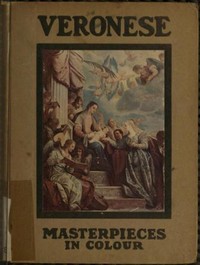
Veronese
Written by François Crastre
Chaptra reads alongside you — AI insights, chapter breakdowns and reader discussions for every book. Join free
About this book
Reading guide
Themes, characters and key ideas in Veronese, written by Chaptra AI.
- about 8 hours
- advanced
- Informative
- Academic
- Historical
François Crastre's "Veronese" offers an early 20th-century biographical deep dive into the life and artistic philosophy of Paolo Veronese, a pivotal painter of the Italian Renaissance. The book meticulously traces Veronese's journey from his origins in Verona to his esteemed status within the Venetian school, detailing his signature flamboyant use of color and complex compositions, notably in "The Wedding at Cana." Crastre contextualizes Veronese's art within the opulent 16th-century Venetian society, exploring his significant masterpieces, interactions with contemporaries, and his notable conflicts with the Inquisition over his biblical interpretations. Ultimately, this biography paints a comprehensive portrait of an artist whose vibrant canvases continue to embody the spirit and splendor of his era, securing his enduring legacy.
“Veronese's art was not merely a reflection, but an exaltation of the Venetian spirit – a symphony of color and light celebrating the city's unparalleled opulence.”
Key themes
- Artistic Innovation and Expression
- This theme explores Veronese's revolutionary approach to painting, particularly his distinctive use of color, light, and grand compositional scale. Crastre emphasizes how Veronese pushed the boundaries of traditional artistic conventions, infusing his works with a vibrant energy and a sense of theatricality that set him apart. It highlights his unique artistic philosophy and his dedication to visual splendor.
- Religious Authority vs. Artistic Freedom
- This theme is central to the narrative surrounding Veronese's trial by the Inquisition. It delves into the conflict between the strictures of religious doctrine, especially during the Counter-Reformation, and an artist's right to imaginative interpretation and creative license in depicting sacred subjects. It highlights the power dynamics between the Church and the artistic community.
- The Splendor and Opulence of Renaissance Venice
- Crastre vividly portrays 16th-century Venice as a city of unparalleled wealth, power, and cultural sophistication. This theme explores how the city's lavish lifestyle, its vibrant social scene, and its powerful patrons directly influenced Veronese's artistic output, leading him to create works that mirrored and celebrated this grandeur. His art is seen as an embodiment of the Venetian spirit.
Worth discussing
How does Crastre's biography illuminate the relationship between artistic creation and the socio-cultural context of 16th-century Venice?
Chapter-by-chapter breakdowns, character arcs and the full thematic analysis come with a free account.
Discussions
No one has started one yet
Questions this book opens up
No discussions yet
Be the first to start a discussion about this book!
Sign up to start the discussionReviews
No reviews yet
Be the first to review this book!