
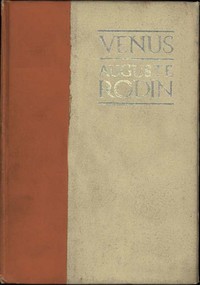
Venus. To the Venus of Melos
Written by Auguste Rodin
Chaptra reads alongside you — AI insights, chapter breakdowns and reader discussions for every book. Join free
About this book
Reading guide
Themes, characters and key ideas in Venus. To the Venus of Melos, written by Chaptra AI.
- about 8 hours
- advanced
- reverent
- contemplative
- philosophical
Auguste Rodin's "Venus. To the Venus of Melos" is a profound lyrical exploration of the iconic ancient Greek sculpture, published in the early 20th century. Through this treatise, Rodin articulates his deep admiration for the Venus of Melos, delving into universal themes of beauty, nature, and the philosophical essence of art. He meticulously examines the sculpture's form, light, and harmonious proportions, reflecting on its enduring impact on artists and admirers across centuries. The work ultimately serves as a testament to the inseparable connection between artistic expression and the natural world, urging readers to seek truth and profound meaning in both art and life.
“"The Venus of Melos is not merely stone; she is the very breath of nature, captured in eternal form."”
Key themes
- The Essence of Beauty
- Rodin delves deep into what constitutes true beauty, moving beyond superficial aesthetics. He argues that the beauty of the Venus of Melos lies in its harmonious proportions, its embodiment of natural truth, and its ability to evoke profound human emotions and universal experiences. It is a beauty that transcends mere visual appeal, reaching into the spiritual and intellectual realms.
- Nature and Artistic Expression
- A cornerstone of Rodin's philosophy, this theme emphasizes the inseparable connection between nature as the ultimate source of inspiration and artistic expression as its interpreter. Rodin sees the Venus of Melos as a supreme example of art successfully capturing and distilling the truths and vitality found in the natural world, arguing that the greatest art is always rooted in the observation and understanding of nature.
- The Timelessness and Enduring Influence of Art
- Rodin explores how certain masterpieces, like the Venus of Melos, transcend their historical context and continue to profoundly impact generations of artists, poets, and admirers. He attributes this enduring influence to the artwork's ability to tap into universal human experiences and eternal truths, making it perpetually relevant and inspiring.
Worth discussing
How does Rodin's perspective as a sculptor inform his analysis of the Venus of Melos, and how might it differ from a historian's or critic's view?
Chapter-by-chapter breakdowns, character arcs and the full thematic analysis come with a free account.
Discussions
No one has started one yet
Questions this book opens up
No discussions yet
Be the first to start a discussion about this book!
Sign up to start the discussionReviews
No reviews yet
Be the first to review this book!