
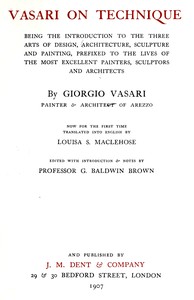
Vasari on technique : $b Being the introduction to the three arts of design, architecture, sculpture, and painting. Prefixed to the lives of the most excellent painters, sculptors and architects
Written by Giorgio Vasari
Chaptra reads alongside you — AI insights, chapter breakdowns and reader discussions for every book. Join free
About this book
Reading guide
Themes, characters and key ideas in Vasari on technique : $b Being the introduction to the three arts of design, architecture, sculpture, and painting. Prefixed to the lives of the most excellent painters, sculptors and architects, written by Chaptra AI.
- about 15 hours
- advanced
- instructive
- scholarly
- historical
Giorgio Vasari's "Vasari on Technique" serves as the crucial introduction to his monumental 'Lives of the Artists,' functioning as a foundational treatise on the three principal arts of design: architecture, sculpture, and painting. Penned in the mid-16th century, this work systematically details the methodologies, materials, and practical challenges inherent in artistic creation during the Renaissance. Vasari aims to demystify and document the technical intricacies often overlooked, providing a comprehensive guide for practitioners and enthusiasts alike. It meticulously explores everything from the properties of various stones used in construction and carving to the nuances of fresco and oil painting, establishing a technical and historical context for the artistic achievements discussed in his subsequent biographies.
“Design is the father of our three arts, Architecture, Sculpture, and Painting, and proceeds from the intellect.”
Key themes
- The Importance of Technique and Craftsmanship
- Vasari fundamentally argues that artistic excellence is inseparable from a profound understanding and mastery of technical processes. He meticulously details the 'how-to' of each art, from preparing materials to applying finishing touches, underscoring that genius is realized through disciplined craft. This theme highlights the Renaissance value placed on skilled labor and practical knowledge as much as on conceptual brilliance.
- The Evolution and Progression of Art
- Vasari frames the history of art as a progression from crude beginnings to the perfection achieved in the High Renaissance. His technical treatise implicitly supports this narrative by showing how techniques themselves evolved, becoming more refined, efficient, and capable of greater expressive power. He often contrasts ancient methods with 'modern' (Renaissance) innovations, positioning his era as the pinnacle of artistic development.
- Materials and Their Properties
- A significant portion of the treatise is dedicated to the detailed analysis of various artistic materials, including stones, metals, woods, pigments, and binders. Vasari explains their origins, characteristics, methods of preparation, and optimal applications. This highlights the artist's need for intimate knowledge of their raw materials to achieve desired effects and ensure the longevity of their work.
Worth discussing
How does Vasari's emphasis on 'designo' as the common root of all three arts reflect Renaissance artistic philosophy?
Chapter-by-chapter breakdowns, character arcs and the full thematic analysis come with a free account.
Discussions
No one has started one yet
Questions this book opens up
No discussions yet
Be the first to start a discussion about this book!
Sign up to start the discussionReviews
No reviews yet
Be the first to review this book!