
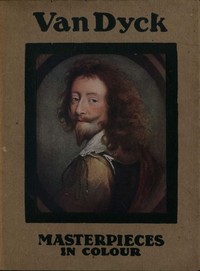
Van Dyck
Written by Percy Moore Turner
Chaptra reads alongside you — AI insights, chapter breakdowns and reader discussions for every book. Join free
About this book
Reading guide
Themes, characters and key ideas in Van Dyck, written by Chaptra AI.
- about 8 hours
- advanced
- informative
- historical
- academic
Percy Moore Turner's "Van Dyck" is an early 20th-century biography offering an exhaustive exploration of the 17th-century Flemish master Anthony Van Dyck. The book meticulously chronicles Van Dyck's artistic journey, from his formative years and apprenticeship under Rubens in Antwerp to his pivotal period in Italy, where he absorbed the techniques of the Venetian masters. It culminates in his celebrated career in England as a court painter to King Charles I, detailing his profound impact on portraiture. Turner highlights Van Dyck's exceptional skill in imbuing his subjects with life and elegance, solidifying his legacy as a preeminent artist whose influence resonates through the centuries.
“Not available without access to the full text.”
Key themes
- Artistic Evolution and Mastery
- This theme explores Van Dyck's relentless pursuit of artistic excellence and his journey from a gifted apprentice to an independent master. It details how his style developed through various influences, particularly Rubens and the Venetian masters, culminating in his unique contribution to portraiture. The biography emphasizes the continuous learning and refinement essential for achieving artistic greatness.
- The Nature of Portraiture
- The book delves into Van Dyck's profound impact on portrait painting, showcasing his exceptional ability to capture not just the likeness but also the essence, status, and inner life of his subjects. This theme examines how Van Dyck elevated portraiture beyond mere representation, infusing it with elegance, psychological depth, and a sense of aristocratic grace that became highly influential.
- Legacy and Influence
- The biography consistently emphasizes Van Dyck's lasting impact on the art world and how his innovations in portraiture continued to influence artists for generations. This theme highlights the enduring power of artistic genius to shape subsequent movements and styles, and the process by which an artist's work transcends their lifetime to become a permanent part of cultural history.
Worth discussing
How did Van Dyck's apprenticeship under Rubens shape his early artistic style, and in what ways did he diverge to establish his own unique vision?
Chapter-by-chapter breakdowns, character arcs and the full thematic analysis come with a free account.
Discussions
No one has started one yet
Questions this book opens up
No discussions yet
Be the first to start a discussion about this book!
Sign up to start the discussionReviews
No reviews yet
Be the first to review this book!