
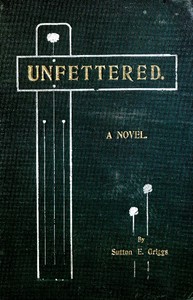
Unfettered: A Novel
Written by Sutton E. (Sutton Elbert) Griggs
Chaptra reads alongside you — AI insights, chapter breakdowns and reader discussions for every book. Join free
About this book
Reading guide
Themes, characters and key ideas in Unfettered: A Novel, written by Chaptra AI.
- about 10 hours
- advanced
- political
- didactic
- thought-provoking
Sutton E. Griggs's "Unfettered" is a groundbreaking utopian novel from 1902 that envisions a future where African Americans have established a powerful, self-governing republic within the United States. Through the narrative of its protagonist, Morals, the novel explores various strategies for Black liberation and self-determination, ranging from political organization and economic independence to armed self-defense. It delves into the ideological debates and internal conflicts within the Black community while confronting the persistent challenges posed by white supremacy. Ultimately, the book offers a radical vision of racial uplift and empowerment, challenging the prevailing social and political norms of the Jim Crow era.
“"The greatest danger confronting the Negro is not the white man's hatred but the Negro's indifference."”
Key themes
- Racial Self-Determination and Utopianism
- The central theme of the novel is the Black community's pursuit of complete self-determination, achieved through the creation of a sovereign, prosperous state. It explores the ideal of a society free from white oppression, where Black people govern themselves, develop their own institutions, and control their own destiny. This utopian vision directly counters the dystopian reality of Jim Crow America.
- Political and Economic Empowerment
- Griggs meticulously details the necessity of political organization and economic independence as cornerstones of racial progress. The novel argues that true liberation cannot be achieved without control over both political power (through self-governance) and economic resources (through self-sustaining industries and wealth creation). It critiques reliance on external forces and emphasizes internal strength.
- Leadership and Ideological Conflict
- The novel explores the qualities of effective leadership and the various ideological approaches to achieving racial equality. It showcases the debates and internal tensions within the Black community regarding the best path forward—whether through accommodation, political agitation, emigration, or armed resistance. Characters often represent different facets of these debates, highlighting the complexity of collective action.
Worth discussing
How does Griggs's vision of 'The Republic of Liberia' compare to other utopian or separatist movements in African American history and literature?
Chapter-by-chapter breakdowns, character arcs and the full thematic analysis come with a free account.
Discussions
No one has started one yet
Questions this book opens up
No discussions yet
Be the first to start a discussion about this book!
Sign up to start the discussionReviews
No reviews yet
Be the first to review this book!