
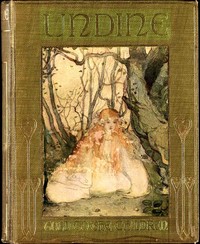
Undine
Written by Friedrich Heinrich Karl La Motte-Fouqué
Chaptra reads alongside you — AI insights, chapter breakdowns and reader discussions for every book. Join free
About this book
Reading guide
Themes, characters and key ideas in Undine, written by Chaptra AI.
- about 3 hours
- intermediate
- romantic
- melancholic
- mysterious
Friedrich de La Motte-Fouqué's "Undine" is a quintessential German Romantic fantasy novel that tells the tragic tale of a water spirit who marries a human knight to gain a soul. Undine, a creature of innocent mischief and deep connection to nature, falls deeply in love with Sir Huldbrand, embarking on a journey of self-discovery and profound emotional experience. However, Huldbrand's human fickle-heartedness and eventual betrayal lead to devastating consequences, forcing Undine to return to her aquatic realm and ultimately reclaim her beloved in death. The novella explores the delicate balance between the spiritual and material worlds, the transformative power of love, and the tragic inevitability of fate when two disparate natures collide.
“"Ah, it is not I who have caused this, but you, Kühleborn, my cruel uncle!"”
Key themes
- Love and Betrayal
- At the heart of "Undine" is the profound and tragic exploration of love's transformative power and the devastating consequences of betrayal. Undine's love for Huldbrand is pure and unconditional, leading her to gain a soul and experience human emotion. Huldbrand's love, initially strong, proves to be fragile, unable to withstand societal pressures and his own human weaknesses. His betrayal not only breaks Undine's heart but also triggers the inescapable, supernatural laws that govern her existence, leading to his demise.
- Innocence vs. Experience
- This theme is central to Undine's journey. She begins as an innocent, soulless being, living in harmony with nature, unburdened by human morality or suffering. Through her love and marriage to Huldbrand, she gains a soul, experiencing the full spectrum of human emotions, including joy, love, jealousy, and profound sorrow. This transformation highlights the bittersweet nature of gaining a soul—it brings the capacity for deep love but also for immense pain.
- Nature vs. Civilization
- The novella vividly contrasts the wild, spiritual, and often unpredictable world of nature (represented by Undine and her kin) with the structured, often superficial, and corruptible world of human civilization (represented by Huldbrand's castle and courtly life). Undine's inability to fully shed her natural essence, and Huldbrand's discomfort with it, drive much of the conflict. Nature is depicted as both beautiful and dangerous, pure yet untamed, while civilization is seen as refined but also prone to fickleness and betrayal.
Worth discussing
How does Undine's journey reflect the Romantic ideal of the 'noble savage' or the purity of nature contrasting with human corruption?
Chapter-by-chapter breakdowns, character arcs and the full thematic analysis come with a free account.
Discussions
No one has started one yet
Questions this book opens up
No discussions yet
Be the first to start a discussion about this book!
Sign up to start the discussionReviews
No reviews yet
Be the first to review this book!