
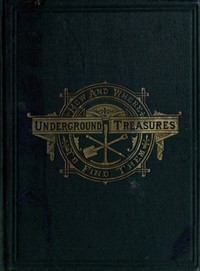
Underground Treasures: How and Where to Find Them: A Key for the Ready Determination of All the Useful Minerals Within the United States
Written by James Orton
Chaptra reads alongside you — AI insights, chapter breakdowns and reader discussions for every book. Join free
About this book
Reading guide
Themes, characters and key ideas in Underground Treasures: How and Where to Find Them: A Key for the Ready Determination of All the Useful Minerals Within the United States, written by Chaptra AI.
- about 10 hours
- intermediate
- Informative
- Practical
- Empowering
James Orton's "Underground Treasures" is a late 19th-century practical manual designed to empower ordinary Americans—farmers, mechanics, and laborers—to identify and extract valuable minerals. It demystifies mineralogy, offering accessible guidelines and a "key" to distinguish useful minerals from common rocks. The book emphasizes the vast, often overlooked mineral wealth of the United States and serves as a call to action for laypersons to engage in prospecting, promising economic opportunity through practical knowledge. It bridges the gap between scientific expertise and popular understanding, making the pursuit of hidden riches attainable for the diligent and informed.
“The immense mineral wealth of the United States, emphasizing how much remains undiscovered or misidentified.”
Key themes
- The Value of Practical Knowledge
- The core premise of Orton's work is that practical, hands-on knowledge is invaluable, especially when applied to the natural world. He argues that formal scientific training isn't strictly necessary for identifying valuable minerals; rather, careful observation, simplified tests, and accessible guidelines can empower anyone. This theme underscores the idea that knowledge, when properly disseminated and applied, can lead directly to economic benefit and personal advancement for the layperson.
- Economic Opportunity and Wealth Generation
- This theme is the primary motivator for the book's existence and its readers. Orton positions mineral identification as a direct pathway to wealth, emphasizing the 'hidden wealth beneath the American landscape.' The book taps into the universal desire for financial betterment, offering a tangible method for individuals to improve their economic standing through their own efforts and newfound knowledge. It frames prospecting not just as an adventure, but as a practical economic endeavor accessible to many.
- Mastery Over Nature and Resource Exploitation
- The book embodies a 19th-century perspective on humanity's relationship with the natural world: one of control, understanding, and exploitation for human benefit. By providing tools to 'determine' and 'extract' minerals, Orton implicitly champions the idea that nature's resources are there to be identified, claimed, and utilized. This reflects a broader societal drive during the industrial era to harness natural forces and materials for progress and development, viewing the landscape as a repository of raw materials rather than an ecosystem to be preserved.
Worth discussing
How does Orton's book reflect the spirit of American expansion and self-reliance in the late 19th century?
Chapter-by-chapter breakdowns, character arcs and the full thematic analysis come with a free account.
Discussions
No one has started one yet
Questions this book opens up
No discussions yet
Be the first to start a discussion about this book!
Sign up to start the discussionReviews
No reviews yet
Be the first to review this book!