
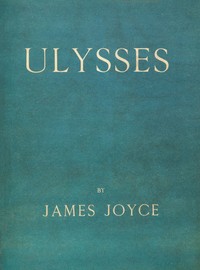
Ulysses
Written by James Joyce
Chaptra reads alongside you — AI insights, chapter breakdowns and reader discussions for every book. Join free
About this book
Read it with a club
Chaptra's fiction clubs — small groups reading the same books and talking as they go.


CraxMe Readers Book Club
Fiction
- 385 members
- 227 discussions
- Started December 2025
Welcome to the Readers Book Club. This is an informal group for like-minded people, where you can discuss books, share and recommend, track your reading progress, and lots more. Discuss Books — all about books. Discuss a particular book or genre, share your favourite quotes. Book Reviews — loved a book and highly recommend it? Or was it just average? Share your review and discuss with fellow readers. (May contain spoilers.) Group Reads — what is a book club without a group read! Buddy Reads — planning to read a book and looking for someone to read it with? Post in the Buddy Read request thread, find a reading buddy, and start discussing.
Read Ulysses alongside people who are reading it too.
Also here: Doorstops, First Lines Club
Chaptra Prime — paid clubs, every club feature, and unlimited reading support, for $5 a month or $60 once.
See PrimeReading guide
Themes, characters and key ideas in Ulysses, written by Chaptra AI.
- about 60 hours
- advanced
- complex
- introspective
- humorous
James Joyce's "Ulysses" is a monumental modernist novel that chronicles the peregrinations and thoughts of Leopold Bloom, an advertising canvasser, and Stephen Dedalus, an aspiring writer, over the course of a single day, June 16, 1904, in Dublin, Ireland. Structured as a modern parallel to Homer's *Odyssey*, the novel delves into the mundane yet profound aspects of everyday life, blending introspection, observation, and memory. Through its groundbreaking stream-of-consciousness narrative, "Ulysses" explores themes of identity, exile, family, sexuality, and the intricate tapestry of human consciousness, establishing itself as a cornerstone of 20th-century literature. It is a dense, multi-layered work that challenges conventional narrative forms and richly details the inner lives of its characters.
“Stately, plump Buck Mulligan came from the stairhead, bearing a bowl of lather on which a mirror and a razor lay crossed.”
Key themes
- The Mundane and the Mythic
- Joyce elevates the everyday experiences of ordinary people to the level of epic poetry by paralleling the events of a single day in Dublin with Homer's *Odyssey*. This theme suggests that profound meaning and heroic struggles are not confined to grand narratives but are inherent in the routines, thoughts, and interactions of daily life.
- Identity and Self-Discovery
- The novel deeply explores the multifaceted nature of identity, particularly through the internal monologues of its characters. Bloom grapples with his Jewish heritage and his place in Irish society, Stephen struggles to define himself as an artist independent of family and church, and Molly's identity is shaped by her sexuality, memories, and relationships. Identity is shown as fluid, constantly constructed through thought, memory, and interaction.
- Language and Communication
- Joyce's experimental use of language is central to the novel's thematic concerns. He explores how language shapes thought, conveys meaning (or fails to), and defines identity. The novel is a vast linguistic playground, employing puns, allusions, neologisms, and a multitude of styles to demonstrate the richness and limitations of human expression.
Worth discussing
How does Joyce use the Homeric *Odyssey* as a structural and thematic framework, and to what extent does it enhance or complicate the reading experience?
Chapter-by-chapter breakdowns, character arcs and the full thematic analysis come with a free account.
Discussions
No one has started one yet
Questions this book opens up
No discussions yet
Be the first to start a discussion about this book!
Sign up to start the discussionReviews
No reviews yet
Be the first to review this book!