
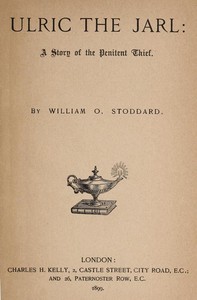
Ulric the Jarl: A Story of the Penitent Thief
Written by William O. Stoddard
Chaptra reads alongside you — AI insights, chapter breakdowns and reader discussions for every book. Join free
About this book
Reading guide
Themes, characters and key ideas in Ulric the Jarl: A Story of the Penitent Thief, written by Chaptra AI.
- about 8 hours
- intermediate
- adventurous
- historical
- epic
William O. Stoddard's "Ulric the Jarl" is a late 19th-century historical novel chronicling the ambitious journey of Ulric, a young Viking jarl, as he sails from the Northland to confront the mighty Roman Empire. Driven by a desire for glory and guided by an ancient prophecy, Ulric embarks on a daring quest aboard his warship, "The Sword," leading to significant cultural encounters and battles. Beyond the initial pursuit of conquest, the narrative delves into themes of heroism and exploration, ultimately exploring a profound transformation in Ulric's character. The titular 'Penitent Thief' aspect suggests a deep moral arc, where Ulric's adventures lead him from a path of potential misdeeds or conquest to one of redemption and spiritual awakening.
“"Let the winds carry 'The Sword' to the southern lands, where Roman eagles dare to soar! Glory awaits those who challenge the mightiest empire!"”
Key themes
- Redemption and Penance
- Central to the novel, particularly highlighted by its subtitle 'A Story of the Penitent Thief,' this theme traces Ulric's journey from potential wrongdoing or misguided ambition to a state of profound regret and a quest for atonement. It explores the moral consequences of his actions, the process of self-reflection, and the possibility of spiritual transformation and forgiveness, redefining his character and purpose.
- Heroism and Glory
- This theme explores Ulric's initial motivations and the evolving definition of heroism. Initially, Ulric seeks glory through martial prowess, conquest, and battle against a formidable foe like the Romans. However, his journey challenges this narrow view, forcing him to confront what true heroism entails beyond mere physical strength or territorial gain, eventually linking it to moral courage and redemption.
- Exploration and Cultural Encounter
- The novel is built around Ulric's daring quest across the seas, highlighting the adventurous spirit of the Vikings and their encounters with vastly different civilizations, particularly the Romans. This theme delves into the clashes and contrasts between these cultures, exploring their respective values, military strategies, and worldviews, and how these interactions shape the characters and plot.
Worth discussing
How does Ulric's initial pursuit of glory compare with his eventual 'penitent' state? What does this say about the nature of heroism?
Chapter-by-chapter breakdowns, character arcs and the full thematic analysis come with a free account.
Discussions
No one has started one yet
Questions this book opens up
No discussions yet
Be the first to start a discussion about this book!
Sign up to start the discussionReviews
No reviews yet
Be the first to review this book!