
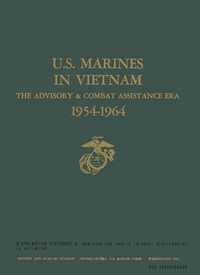
U.S. Marines In Vietnam, Volume 1 (of 9) : $b The advisory & combat assistance era 1954-1964
Written by Robert H. Whitlow
Chaptra reads alongside you — AI insights, chapter breakdowns and reader discussions for every book. Join free
About this book
Reading guide
Themes, characters and key ideas in U.S. Marines In Vietnam, Volume 1 (of 9) : $b The advisory & combat assistance era 1954-1964, written by Chaptra AI.
- about 12 hours
- advanced
- Informative
- Historical
- Analytical
U.S. Marines In Vietnam, Volume 1: The Advisory & Combat Assistance Era 1954-1964 is the foundational volume in a nine-part official history chronicling the U.S. Marine Corps' involvement in Vietnam. This meticulous historical account documents the crucial, often overlooked, decade following the end of the French-Indochina War, detailing the nascent stages of American military engagement. It traces the evolution of Marine operations from early advisory missions, focused on building the South Vietnamese Marine Corps, to more direct combat assistance. The book meticulously establishes the geopolitical, demographic, and historical context of Vietnam, providing a deep understanding of the challenges faced by both the nascent South Vietnamese government and its American allies during a period of escalating Cold War tensions and insurgent threats, setting the stage for deeper engagement.
“The period between the French withdrawal and the full commitment of U.S. ground forces represents a critical, formative chapter in American involvement.”
Key themes
- The Evolution of Conflict
- This theme explores how the nature of the conflict in Vietnam transformed from a post-colonial struggle into a Cold War proxy battle, and how the U.S. Marine Corps' role evolved within this changing landscape. It details the shift from conventional warfare theory to the realities of counterinsurgency and guerrilla tactics, and the incremental escalation of U.S. involvement.
- Challenges of Nation-Building and Military Assistance
- The book meticulously details the immense difficulties in establishing a stable government and an effective indigenous military force in a post-colonial, politically fractured, and culturally distinct nation. It highlights the complexities of transferring military knowledge, the impact of political corruption, and the struggle to foster national unity and legitimacy.
- Institutional Adaptation and Learning
- This theme examines how the U.S. Marine Corps, as an institution, attempted to adapt its doctrines, training, and operational strategies to the unique demands of the Vietnam War's early phases. It explores the successes and failures in understanding the nature of the conflict and adjusting to new forms of warfare, highlighting the bureaucratic and strategic hurdles involved.
Worth discussing
How effectively did U.S. advisory efforts contribute to the development of the South Vietnamese military, particularly the VNMC, during this period?
Chapter-by-chapter breakdowns, character arcs and the full thematic analysis come with a free account.
Discussions
No one has started one yet
Questions this book opens up
No discussions yet
Be the first to start a discussion about this book!
Sign up to start the discussionReviews
No reviews yet
Be the first to review this book!