
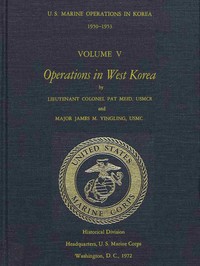
U.S. Marine Operations in Korea, 1950-1953, Volume 5 (of 5): Operations in West Korea
Written by United States. Marine Corps,Pat Meid,James M. Yingling
Chaptra reads alongside you — AI insights, chapter breakdowns and reader discussions for every book. Join free
About this book
Reading guide
Themes, characters and key ideas in U.S. Marine Operations in Korea, 1950-1953, Volume 5 (of 5): Operations in West Korea, written by Chaptra AI.
- about 12 hours
- advanced
- informative
- historical
- strategic
U.S. Marine Operations in Korea, 1950-1953, Volume 5, co-authored by Lieutenant Colonel Pat Meid and Major James M. Yingling, serves as a crucial historical document detailing the final phases of the United States Marine Corps' involvement in the Korean War, from March 1952 to July 1953. This volume meticulously chronicles the 1st Marine Division's strategic relocation to West Korea, emphasizing their critical role in defending Seoul and fortifying key positions against Chinese Communist Forces. It delves into the intricate details of military operations, logistical challenges, and the tactical efforts undertaken to secure victory. As an official history, the book provides an authoritative, in-depth analysis of the Marines' enduring commitment and adaptability during a prolonged and often static phase of the conflict.
“The transition of the 1st Marine Division to the far western front marked a critical strategic pivot, essential for the direct defense of Seoul.”
Key themes
- Strategic Adaptation
- The theme explores how military forces must adapt their strategies and tactics in response to changing battlefield conditions and geopolitical imperatives. The 1st Marine Division's relocation to West Korea and their shift from mobile to positional warfare exemplify this crucial aspect of military operations.
- The Defense of Key Positions
- This theme focuses on the strategic imperative of holding specific geographical locations due to their tactical or political significance. The defense of Seoul and critical positions in West Korea against enemy advances is central to the narrative, illustrating the high stakes involved in positional warfare.
- Logistical Complexity
- This theme highlights the critical role of logistics in sustaining military operations, particularly in a prolonged conflict. The book details the immense challenges of supplying, equipping, and moving a large division, underscoring that strategic success is often contingent upon effective logistical support.
Worth discussing
How does the book's focus on the 'latter phases' of the Korean War change our understanding of the conflict compared to earlier, more mobile phases?
Chapter-by-chapter breakdowns, character arcs and the full thematic analysis come with a free account.
Discussions
No one has started one yet
Questions this book opens up
No discussions yet
Be the first to start a discussion about this book!
Sign up to start the discussionReviews
No reviews yet
Be the first to review this book!