
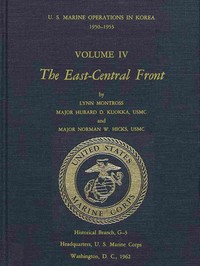
U.S. Marine Operations in Korea, 1950-1953, Volume 4 (of 5): The East-Central Front
Written by United States. Marine Corps,Lynn Montross,Norman W. Hicks,Hubard D. Kuokka
Chaptra reads alongside you — AI insights, chapter breakdowns and reader discussions for every book. Join free
About this book
Reading guide
Themes, characters and key ideas in U.S. Marine Operations in Korea, 1950-1953, Volume 4 (of 5): The East-Central Front, written by Chaptra AI.
- about 12 hours
- advanced
- historical
- strategic
- resilient
This volume, part of the official U.S. Marine Corps history of the Korean War, meticulously chronicles the Marines' operations on the East-Central front from December 1950 through early 1952. It details their recovery and re-establishment following the arduous Chosin Reservoir campaign, highlighting the strategic directives of the new Eighth Army Commander, General Matthew Ridgway. The book delves into the complex administrative and logistical challenges faced, alongside the critical tactical adaptations required to confront evolving North Korean and Chinese threats. Ultimately, it portrays the unwavering resilience and commitment of the Marine forces as they prepared for and engaged in crucial, often brutal, battles.
“"After the trials of Chosin, the Corps faced not just rebuilding its strength, but redefining its purpose in a war that had fundamentally shifted."”
Key themes
- Resilience and Commitment
- Central to the narrative is the unwavering resilience and commitment of the U.S. Marine Corps. Despite suffering heavy losses and facing immense challenges, the book showcases their collective determination to recover, adapt, and continue fighting. This theme explores the psychological fortitude required to endure sustained combat and the institutional pride that drives a military force.
- Military Adaptation and Evolution
- This theme explores how the U.S. Marine Corps, and the broader UN forces, had to continually adjust their strategies, tactics, and operational methods in response to the changing nature of the Korean War. After the fluid, mobile warfare of 1950, the conflict evolved into a more static, attritional struggle, particularly on the East-Central front, requiring new approaches to reconnaissance, defense, and limited offensives.
- Leadership and Morale
- The book significantly emphasizes the critical role of effective leadership, particularly General Matthew Ridgway's impact, in rebuilding morale and setting a new strategic direction for the battered forces. It illustrates how strong leadership can transform a military unit's fighting spirit and operational effectiveness even in the direst circumstances.
Worth discussing
How did General Matthew Ridgway's leadership impact the morale and operational effectiveness of the U.S. forces in Korea?
Chapter-by-chapter breakdowns, character arcs and the full thematic analysis come with a free account.
Discussions
No one has started one yet
Questions this book opens up
No discussions yet
Be the first to start a discussion about this book!
Sign up to start the discussionReviews
No reviews yet
Be the first to review this book!