
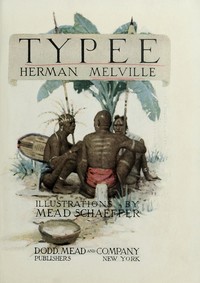
Typee
Written by Herman Melville
Chaptra reads alongside you — AI insights, chapter breakdowns and reader discussions for every book. Join free
About this book
Reading guide
Themes, characters and key ideas in Typee, written by Chaptra AI.
- about 9 hours
- intermediate
- adventure
- exotic
- suspenseful
Herman Melville's "Typee" is a semi-autobiographical adventure narrative set in 1840s Marquesas Islands. It chronicles the escape of two American sailors, Tommo and Toby, from a brutal whaling ship into what they hope will be a paradise. They find themselves living among the enigmatic Typee people, a tribe rumored to be cannibals, experiencing their idyllic yet unsettling culture. The novel explores themes of cultural relativism, the allure and danger of the 'noble savage,' and the clash between Western civilization and indigenous life, all through the lens of Tommo's fascinated yet fearful observations as he yearns for escape.
“It is a peculiarity of the Marquesan that he very seldom speaks a word, but when he chooses to express anything, he accompanies the action with a significant gesture, so that a stranger understands him at once.”
Key themes
- Clash of Civilizations/Cultural Relativism
- The novel's central theme explores the profound differences and perceived superiorities/inferiorities between Western 'civilization' and indigenous Polynesian culture. Melville challenges ethnocentric biases by presenting the Typee's communal, unmaterialistic, and naturally harmonious society as potentially more 'civilized' than the often hypocritical, violent, and exploitative Western world. Tommo's observations constantly compare and contrast the two, forcing the reader to question which way of life is truly superior.
- Freedom vs. Captivity
- The narrative begins with Tommo's quest for freedom from the oppressive conditions of the whaling ship, only to find himself in a different, more ambiguous form of 'captivity' among the Typee. While he enjoys physical comforts and a seemingly idyllic existence, his inability to leave the valley and his constant fear of the Typee's true intentions create a profound psychological prison, exploring the multifaceted nature of what it means to be truly free.
- The Noble Savage
- Melville extensively explores the Romantic concept of the 'noble savage' through his portrayal of the Typee. He depicts them as living in harmony with nature, possessing natural dignity, beauty, and generosity, seemingly untainted by the corruptions of Western civilization. However, this idealization is constantly complicated by Tommo's underlying fear of their potential savagery and cannibalistic practices, creating a nuanced and often contradictory representation that both celebrates and questions the archetype.
Worth discussing
How does Melville challenge or reinforce the concept of the 'noble savage' through his portrayal of the Typee people?
Chapter-by-chapter breakdowns, character arcs and the full thematic analysis come with a free account.
Discussions
No one has started one yet
Questions this book opens up
No discussions yet
Be the first to start a discussion about this book!
Sign up to start the discussionReviews
No reviews yet
Be the first to review this book!