
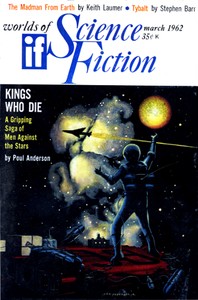
Tybalt
Written by Stephen Barr
Chaptra reads alongside you — AI insights, chapter breakdowns and reader discussions for every book. Join free
About this book
Reading guide
Themes, characters and key ideas in Tybalt, written by Chaptra AI.
- about 7 hours
- intermediate
- humorous
- philosophical
- imaginative
Stephen Barr's "Tybalt" is an imaginative science fiction novella from the early 1960s that delves into themes of identity and existence through a unique time-travel mishap. Physics teacher Howard Dax, seeking escape from his mundane life, attempts to travel back in time to inhabit an ancestor's body. Instead, he finds himself transformed into a cat named Tybalt in late Middle Ages England. The narrative humorously and poignantly explores Dax's struggles for survival, his attempts to communicate his predicament, and his philosophical reflections on consciousness and the human condition. It masterfully blends scientific inquiry with the timeless trials of youth, societal pressures, and the profound absurdity of his transformation.
“To be human is to yearn for what is beyond reach, but to be a cat is to simply exist, exquisitely, in the now. And I, somehow, was both.”
Key themes
- Identity and Self-Perception
- The central theme revolves around Howard Dax's struggle with his identity after being transformed into a cat. It explores what constitutes the 'self' – is it the body, the mind, memories, or the ability to interact and communicate? Dax grapples with retaining his human intellect while experiencing the world through animal senses, leading to profound questions about self-definition.
- Communication Barriers
- The novella vividly portrays the immense challenges of communication, not only between different species but also across vast historical and cultural divides. Dax's inability to express his human identity as a cat, and the medieval people's lack of understanding of his true nature, highlight the fundamental role of language and shared context in connection.
- Adaptation and Survival
- Dax's transformation forces him into an immediate and brutal struggle for survival in a primitive, dangerous world. The theme explores his physical and mental adaptation to his new form and environment, highlighting the resilience of life and the fundamental drive to persist, regardless of circumstances.
Worth discussing
How does Barr use the transformation into a cat to explore the nature of human identity and consciousness?
Chapter-by-chapter breakdowns, character arcs and the full thematic analysis come with a free account.
Discussions
No one has started one yet
Questions this book opens up
No discussions yet
Be the first to start a discussion about this book!
Sign up to start the discussionReviews
No reviews yet
Be the first to review this book!