
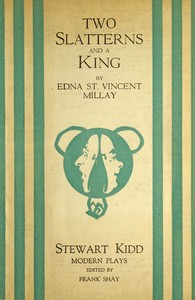
Two Slatterns and a King: A Moral Interlude
Written by Edna St. Vincent Millay
Chaptra reads alongside you — AI insights, chapter breakdowns and reader discussions for every book. Join free
About this book
Reading guide
Themes, characters and key ideas in Two Slatterns and a King: A Moral Interlude, written by Chaptra AI.
- about 1 hours
- intermediate
- humorous
- satirical
- witty
Edna St. Vincent Millay's "Two Slatterns and a King: A Moral Interlude" is a witty one-act play that satirizes societal judgments and the unpredictable nature of fate. It centers on a King who seeks a bride based on the cleanliness of her kitchen, leading him to mistakenly choose the disheveled Slut over the meticulously tidy Tidy. Through the playful intervention of Chance, the play humorously unravels the folly of superficial judgments and the pursuit of an idealized perfection. Millay ultimately delivers a moral lesson, highlighting the importance of looking beyond appearances and embracing life's inherent chaos and unpredictability.
“"A clean kitchen, by my royal decree, shall choose my queen for me!"”
Key themes
- Superficiality vs. Substance
- This is the central theme, explored through the King's decision to choose a bride based solely on the tidiness of her kitchen. Millay critiques the human tendency to judge by outward appearances rather than seeking deeper character or intrinsic worth.
- Fate, Chance, and Free Will
- The personification of Chance as a character directly explores the tension between human agency and the unpredictable forces that shape our lives. The play suggests that even well-intentioned plans can be derailed by arbitrary circumstances.
- Societal Expectations and Conformity
- The play implicitly critiques the pressures on individuals, particularly women, to conform to certain domestic or social ideals. Tidy represents the woman who adheres to these expectations, while Slut represents a departure from them.
Worth discussing
How does the play satirize societal expectations of women and domesticity in the early 20th century?
Chapter-by-chapter breakdowns, character arcs and the full thematic analysis come with a free account.
Discussions
No one has started one yet
Questions this book opens up
No discussions yet
Be the first to start a discussion about this book!
Sign up to start the discussionReviews
No reviews yet
Be the first to review this book!