
About this book
Reading guide
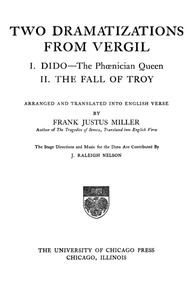
Themes, characters and key ideas in Two Dramatizations from Vergil: I. Dido—the Phœnecian Queen; II. The Fall of Troy, written by Chaptra AI.
- about 4 hours
- intermediate
- tragic
- epic
- romantic
Frank Justus Miller's "Two Dramatizations from Vergil" offers a compelling early 20th-century English verse adaptation of pivotal episodes from Virgil's epic, the "Aeneid." The collection brings to life the tragic romance between Dido, Queen of Carthage, and the Trojan hero Aeneas, alongside the devastating fall of Troy. These dramatic retellings aim to make classical themes of duty, destiny, and the human cost of war accessible to a contemporary audience. By focusing on the emotional intensity and dramatic conflict inherent in Virgil's narrative, Miller's work serves as a powerful introduction to one of literature's most enduring stories, highlighting the interplay of divine will and personal desire. The adaptations capture the grandeur and pathos of the original, inviting readers into a world where fate dictates the rise and fall of empires and individuals.
“"O, love, what madness drives thee to thy doom, when duty calls and destiny awaits?"”
Key themes
- Fate vs. Free Will
- This central theme explores the extent to which characters like Aeneas and Dido are truly agents of their own destinies or merely pawns in a larger, divinely ordained plan. Aeneas is constantly reminded of his fate to found Rome, often at the expense of his personal desires, while Dido's love and subsequent demise are heavily influenced by divine intervention, raising questions about individual autonomy.
- Duty vs. Desire
- This theme is most poignantly explored through Aeneas's internal conflict. He is deeply torn between his passionate love for Dido and his sacred duty to his family, his people, and the gods to found a new city. His ultimate choice to prioritize duty highlights the immense personal sacrifice often required for a greater, collective purpose. Dido, too, faces a conflict between her duty as queen and her overwhelming desire for Aeneas.
- The Trauma of War and Exile
- Both dramatizations vividly portray the devastating impact of war and the subsequent experience of exile. 'The Fall of Troy' depicts the brutal destruction of a city and its people, while 'Dido' shows Aeneas and his Trojans as refugees seeking a new home. The psychological scars, the loss of homeland, and the constant threat of further hardship are central to the characters' motivations and experiences.
Worth discussing
How do these dramatizations balance the concepts of fate and free will in the lives of Dido and Aeneas?
Chapter-by-chapter breakdowns, character arcs and the full thematic analysis come with a free account.
Discussions
No one has started one yet
Questions this book opens up
No discussions yet
Be the first to start a discussion about this book!
Sign up to start the discussionReviews
No reviews yet
Be the first to review this book!