
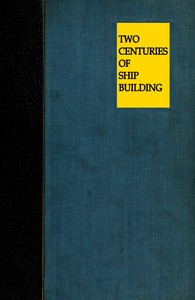
Two Centuries of Shipbuilding by the Scotts at Greenock
Written by Scotts' Shipbuilding & Engineering Co. Ltd.
Chaptra reads alongside you — AI insights, chapter breakdowns and reader discussions for every book. Join free
About this book
Reading guide
Themes, characters and key ideas in Two Centuries of Shipbuilding by the Scotts at Greenock, written by Chaptra AI.
- about 15 hours
- advanced
- informative
- historical
- detailed
This monumental work chronicles the extensive history of Scotts' Shipbuilding & Engineering Co. Ltd., tracing its origins and evolution over two centuries at Greenock, Scotland. It meticulously documents the company's pivotal role in the global shipbuilding industry, from its humble beginnings to its prominence through various industrial revolutions and global conflicts. The book serves as both a detailed corporate history and a broader narrative of industrial innovation, technological advancement, and the enduring legacy of a single family's dedication to maritime engineering. It offers invaluable insights into the economic, social, and technological forces that shaped shipbuilding in Britain.
“"The history of Scotts' is inseparable from the history of shipbuilding itself in Scotland, mirroring every major innovation and adapting to every challenge over two hundred years."”
Key themes
- Industrial Innovation and Technological Advancement
- This theme is central to the book, exploring how Scotts' continuously embraced and pioneered new technologies in shipbuilding. It details the transition from wood to iron and then steel, the evolution from sail to steam and later diesel propulsion, and advancements in naval architecture and marine engineering. The book showcases how the company's survival and success were directly tied to its ability to innovate and adapt to changing industrial landscapes and client demands.
- Family Legacy and Entrepreneurship
- The book deeply explores the multi-generational continuity of the Scott family's ownership and management, emphasizing how their entrepreneurial spirit, vision, and dedication were crucial to the company's two-century lifespan. It illustrates the challenges and responsibilities of maintaining a family business through various economic cycles and how personal leadership directly influenced corporate strategy and innovation.
- The Impact of Global Conflicts and Economic Cycles
- The narrative frequently positions Scotts' within the broader context of global events, demonstrating how major conflicts (Napoleonic Wars, WWI, WWII) stimulated demand for naval vessels and how economic depressions impacted the industry. It shows the company's resilience in adapting to wartime production surges and surviving severe economic downturns, highlighting the volatile nature of heavy industry.
Worth discussing
How does Scotts' history reflect the broader trajectory of the British industrial revolution and its subsequent challenges?
Chapter-by-chapter breakdowns, character arcs and the full thematic analysis come with a free account.
Discussions
No one has started one yet
Questions this book opens up
No discussions yet
Be the first to start a discussion about this book!
Sign up to start the discussionReviews
No reviews yet
Be the first to review this book!