
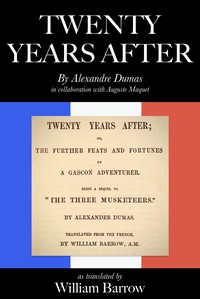
Twenty years after
Written by Alexandre Dumas,Auguste Maquet
Chaptra reads alongside you — AI insights, chapter breakdowns and reader discussions for every book. Join free
About this book
Reading guide
Themes, characters and key ideas in Twenty years after, written by Chaptra AI.
- about 18 hours
- intermediate
- adventurous
- dramatic
- historical
Twenty Years After, the gripping sequel to The Three Musketeers, reunites D'Artagnan, Athos, Porthos, and Aramis two decades later amidst the tumultuous backdrop of the French Fronde and the English Civil War. While France grapples with Cardinal Mazarin's unpopular rule and rising discontent, the once inseparable friends find themselves on opposing sides of political conflicts, testing the enduring bonds of their camaraderie. The narrative masterfully weaves together high-stakes adventure, political maneuvering, and deeply personal quests for loyalty and revenge, as D'Artagnan serves Mazarin and his former companions navigate their own paths, often in direct opposition. Ultimately, the novel explores the evolution of friendship, the weight of past actions, and the complex nature of duty versus personal conviction in a rapidly changing world.
“"Friendship is but a name, a charm, a bond, which ties the strong to the weak, and the weak to the strong."”
Key themes
- Friendship and Loyalty
- The core theme of the novel, exploring how the bonds of friendship endure and evolve over time, even when tested by divergent political loyalties and personal ambitions. Despite finding themselves on opposing sides of civil wars, the musketeers' fundamental loyalty to one another consistently overrides their other allegiances, proving that their brotherhood is an unbreakable force.
- Political Intrigue and Power
- The novel is deeply embedded in the political turmoils of 17th-century Europe, specifically the French Fronde and the English Civil War. It explores the machinations of power, the instability of monarchies, the role of cunning ministers like Mazarin, and the shifting loyalties of nobles and commoners alike. It highlights how personal ambition and national interest often intertwine.
- Revenge and Justice
- The theme of revenge is personified by Mordaunt, the son of Milady de Winter, who relentlessly pursues the musketeers to avenge his mother's death. This forces the protagonists to confront the moral implications of their past actions, blurring the lines between justice and vengeance. The novel questions whether an act of 'justice' in the past can justify a cycle of revenge in the present.
Worth discussing
How do the characters' experiences over twenty years change their perspectives on loyalty, duty, and friendship? Are these changes for the better or worse?
Chapter-by-chapter breakdowns, character arcs and the full thematic analysis come with a free account.
Discussions
No one has started one yet
Questions this book opens up
No discussions yet
Be the first to start a discussion about this book!
Sign up to start the discussionReviews
No reviews yet
Be the first to review this book!