
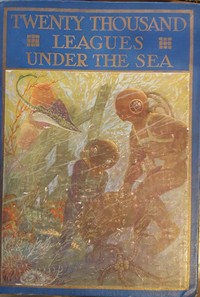
Twenty Thousand Leagues Under the Seas: An Underwater Tour of the World
Written by Jules Verne
Chaptra reads alongside you — AI insights, chapter breakdowns and reader discussions for every book. Join free
About this book
Read it with a club
Chaptra's fiction clubs — small groups reading the same books and talking as they go.


CraxMe Readers Book Club
Fiction
- 385 members
- 227 discussions
- Started December 2025
Welcome to the Readers Book Club. This is an informal group for like-minded people, where you can discuss books, share and recommend, track your reading progress, and lots more. Discuss Books — all about books. Discuss a particular book or genre, share your favourite quotes. Book Reviews — loved a book and highly recommend it? Or was it just average? Share your review and discuss with fellow readers. (May contain spoilers.) Group Reads — what is a book club without a group read! Buddy Reads — planning to read a book and looking for someone to read it with? Post in the Buddy Read request thread, find a reading buddy, and start discussing.
Read Twenty Thousand Leagues Under the Seas: An Underwater Tour of the World alongside people who are reading it too.
Also here: Doorstops, First Lines Club
Chaptra Prime — paid clubs, every club feature, and unlimited reading support, for $5 a month or $60 once.
See PrimeReading guide
Themes, characters and key ideas in Twenty Thousand Leagues Under the Seas: An Underwater Tour of the World, written by Chaptra AI.
- about 10 hours
- intermediate
- adventurous
- mysterious
- scientific
Jules Verne's "Twenty Thousand Leagues Under the Seas" plunges readers into a thrilling 19th-century adventure aboard the futuristic submarine, the Nautilus. Professor Aronnax, his loyal servant Conseil, and the spirited harpooner Ned Land are captured by the enigmatic Captain Nemo after their frigate is destroyed by what they believe to be a sea monster. Forced to join Nemo's isolated, vengeful existence beneath the waves, they embark on an unprecedented journey across the world's oceans, witnessing breathtaking marine wonders and the dark consequences of Nemo's self-imposed exile. The novel explores themes of scientific marvel, freedom, revenge, and humanity's complex relationship with the natural world, all while maintaining a sense of profound mystery surrounding Nemo's true identity and motivations.
“The sea is only an embodiment of a supernatural and wonderful existence. It is nothing but love and emotion; it is the 'living infinite.'”
Key themes
- Scientific Exploration and Discovery
- The core of the novel is the journey into the unknown depths of the ocean, presenting a world of scientific marvels. Verne, through Aronnax's narration, meticulously details marine biology, geology, and oceanography, celebrating the human drive to explore and understand the natural world. The Nautilus itself is the ultimate tool for this exploration, pushing the boundaries of what was conceivable in Verne's era.
- Freedom vs. Confinement
- This theme is central to the plight of Aronnax, Conseil, and especially Ned Land, who are held captive aboard the Nautilus. It explores the human yearning for liberty and autonomy. Captain Nemo, paradoxically, views his underwater existence as the ultimate freedom from societal constraints and political interference, yet he imposes a strict form of confinement on his 'guests' and himself, driven by his own past experiences.
- Humanity's Relationship with Nature and Technology
- Verne examines how humanity interacts with the natural world, particularly the vast and mysterious ocean, and the role technology plays in this relationship. The Nautilus represents humanity's triumph over nature through engineering, allowing access to previously inaccessible realms. However, Nemo also uses this technology to wage war, highlighting technology's dual potential for wonder and destruction. The novel also critiques human exploitation of marine resources and the pollution of the seas.
Worth discussing
How does Captain Nemo embody the ethical dilemmas of scientific advancement and unchecked power?
Chapter-by-chapter breakdowns, character arcs and the full thematic analysis come with a free account.
Discussions
No one has started one yet
Questions this book opens up
No discussions yet
Be the first to start a discussion about this book!
Sign up to start the discussionReviews
No reviews yet
Be the first to review this book!