
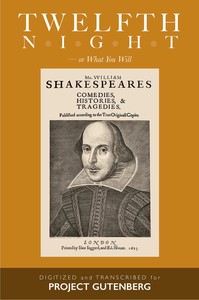
Twelfth Night; Or, What You Will
Written by William Shakespeare
Chaptra reads alongside you — AI insights, chapter breakdowns and reader discussions for every book. Join free
About this book
Reading guide
Themes, characters and key ideas in Twelfth Night; Or, What You Will, written by Chaptra AI.
- about 8 hours
- advanced
- humorous
- romantic
- witty
William Shakespeare's "Twelfth Night; Or, What You Will" is a vibrant comedic play exploring themes of love, mistaken identity, and social order through a series of entangled relationships. Following a shipwreck, Viola assumes the disguise of a man, Cesario, and enters the service of Duke Orsino, who is infatuated with Countess Olivia. This disguise precipitates a complex love triangle where Orsino loves Olivia, Olivia falls for Cesario, and Viola (as Cesario) secretly loves Orsino. The main plot is interwoven with a boisterous subplot involving Olivia's puritanical steward, Malvolio, who is tricked into believing his mistress loves him, leading to his public humiliation. The play culminates in a joyous resolution of mistaken identities, multiple marriages, and a restoration of social harmony, celebrating the liberating power of festive chaos.
“If music be the food of love, play on.”
Key themes
- Disguise and Identity
- The theme of disguise is central to 'Twelfth Night,' primarily through Viola's cross-dressing as Cesario. This physical disguise blurs gender boundaries and allows for a fluid exploration of identity, challenging characters' perceptions of self and others. It highlights how external appearance can create or conceal truth, leading to both comedic misunderstandings and profound self-discovery. The play suggests that identity is not fixed but can be performed, shaped by circumstance, and influenced by perception.
- The Nature of Love
- The play explores love in its various, often contradictory, forms: Orsino's melancholic, idealized, and somewhat self-indulgent love; Olivia's sudden, passionate, and impulsive love; and Viola's steadfast, patient, and self-sacrificing love. It demonstrates love's irrationality, its capacity for both joy and pain, and its power to transform or delude individuals. The play ultimately celebrates genuine, mutual affection over superficial infatuation.
- Folly and Wisdom
- This theme is embodied by Feste, the wise fool, who often speaks the most profound truths while those in positions of power or authority (like Orsino, Olivia, and especially Malvolio) exhibit various forms of folly. The play suggests that true wisdom often lies not in rigid adherence to rules or self-importance, but in embracing life's absurdities, recognizing one's own limitations, and understanding the fleeting nature of joy and sorrow. Folly can be harmless revelry or destructive self-deception.
Worth discussing
How does Viola's disguise as Cesario allow for a deeper exploration of gender roles and identity in the play?
Chapter-by-chapter breakdowns, character arcs and the full thematic analysis come with a free account.
Discussions
No one has started one yet
Questions this book opens up
No discussions yet
Be the first to start a discussion about this book!
Sign up to start the discussionReviews
No reviews yet
Be the first to review this book!