
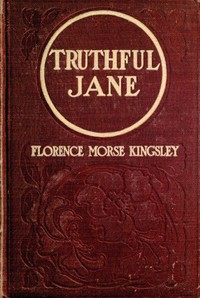
Truthful Jane
Written by Florence Morse Kingsley
Chaptra reads alongside you — AI insights, chapter breakdowns and reader discussions for every book. Join free
About this book
Reading guide
Themes, characters and key ideas in Truthful Jane, written by Chaptra AI.
- about 6 hours
- intermediate
- earnest
- moralistic
- sentimental
Due to the limited availability of specific plot details for "Truthful Jane" by Florence Morse Kingsley, a precise summary is challenging. However, based on the author's known style (late 19th/early 20th-century American popular fiction, often with moral undertones) and the suggestive title, the book likely centers on a protagonist named Jane whose defining characteristic is her unwavering commitment to honesty. The narrative would presumably explore the various dilemmas and social challenges she faces as she navigates a world where absolute truthfulness can be difficult or inconvenient, ultimately examining the virtues and potential costs of integrity in her personal and social life. It likely serves as a character study and a moral fable, typical of its era.
“Specific quotes are unavailable. However, the narrative would likely feature direct statements on the importance of honesty, such as: 'A truth unsaid is often a lie half-spoken.'”
Key themes
- The Virtue of Honesty
- This is the central theme, exploring the inherent value and practical application of truthfulness in all aspects of life. The book would likely champion honesty as a foundational virtue, examining its challenges and rewards.
- Integrity vs. Social Expediency
- This theme delves into the conflict between adhering to one's moral principles (integrity) and conforming to social expectations or convenience (expediency), particularly when truthfulness might cause discomfort or disruption.
- Personal Growth Through Principle
- The narrative would likely illustrate how Jane's unwavering commitment to truth shapes her character and leads to profound personal development, reinforcing the idea that moral fortitude builds strength and wisdom.
Worth discussing
What are the societal pressures that make absolute truthfulness difficult, and how might Jane have navigated them?
Chapter-by-chapter breakdowns, character arcs and the full thematic analysis come with a free account.
Discussions
No one has started one yet
Questions this book opens up
No discussions yet
Be the first to start a discussion about this book!
Sign up to start the discussionReviews
No reviews yet
Be the first to review this book!