
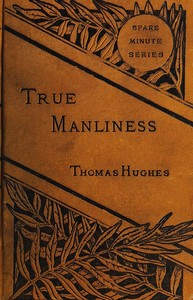
True Manliness: From the Writings of Thomas Hughes
Written by Thomas Hughes
Chaptra reads alongside you — AI insights, chapter breakdowns and reader discussions for every book. Join free
About this book
Reading guide
Themes, characters and key ideas in True Manliness: From the Writings of Thomas Hughes, written by Chaptra AI.
- about 8 hours
- advanced
- reflective
- didactic
- earnest
Thomas Hughes's "True Manliness" is a late 19th-century philosophical treatise exploring the multifaceted concept of manliness, primarily through the lens of Christian values. The work distinguishes between mere physical courage and a higher, moral courage rooted in self-sacrifice, duty, and integrity. Hughes employs historical examples and moral dilemmas to illustrate his points, advocating for virtues such as loyalty, truthfulness, and selfless action in the face of adversity. The book, prefaced by reflections on Hughes's own life and influences, serves as a guide to living a purposeful life aligned with deeply held convictions, emphasizing the ongoing moral effort required for true character development.
“True manliness emerges not from the absence of fear, but from the moral effort to overcome it.”
Key themes
- True Manliness and Virtue
- This is the overarching theme, exploring Hughes's comprehensive definition of manliness beyond physical strength or aggression. It encompasses moral integrity, self-control, and the cultivation of virtues like honesty, loyalty, and empathy. Hughes argues that true manliness is an active, lifelong pursuit of moral excellence.
- Courage and Self-Sacrifice
- A core component of 'true manliness,' Hughes delves deeply into the nature of courage, differentiating between instinctive, animalistic bravery and a higher, more noble form rooted in moral conviction and the willingness to sacrifice for others or for a principle. This courage demands self-control and a conscious choice to act despite fear.
- Christian Values and Morality
- Hughes explicitly grounds his concept of manliness in Christian ethics. Virtues such as charity, humility, selflessness, and duty to God and neighbor are presented as foundational to true character. The book argues that a life lived in accordance with these values is the ultimate expression of manliness.
Worth discussing
How does Hughes's definition of 'manliness' compare to contemporary understandings of masculinity? What aspects are still relevant, and what aspects are outdated?
Chapter-by-chapter breakdowns, character arcs and the full thematic analysis come with a free account.
Discussions
No one has started one yet
Questions this book opens up
No discussions yet
Be the first to start a discussion about this book!
Sign up to start the discussionReviews
No reviews yet
Be the first to review this book!