
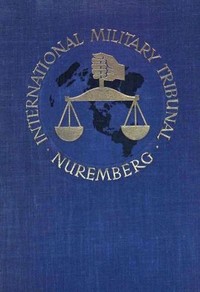
Trial of the major war criminals before the International Military Tribunal, Nuremburg, 14 November 1945-1 October 1946, volume 18
Written by Various
Chaptra reads alongside you — AI insights, chapter breakdowns and reader discussions for every book. Join free
About this book
Reading guide
Themes, characters and key ideas in Trial of the major war criminals before the International Military Tribunal, Nuremburg, 14 November 1945-1 October 1946, volume 18, written by Chaptra AI.
- about 100 hours
- advanced
- formal
- somber
- judicial
Volume 18 of "Trial of the Major War Criminals Before the International Military Tribunal" provides an official, verbatim record of the Nuremberg Trials, specifically covering proceedings between November 1945 and October 1946. This historical document meticulously details the legal arguments against high-ranking Nazi officials, particularly exploring the complex interplay between military obedience, individual responsibility, and international law in the context of wartime atrocities. It serves as a foundational resource for understanding the post-WWII pursuit of justice, documenting the procedural framework, the challenges faced by the defense, and the Tribunal's rigorous examination of moral culpability. The volume highlights the defense of figures like Wilhelm Keitel, whose counsel grapples with justifying actions taken under duress of Hitler's command, thereby illuminating the profound ethical dilemmas central to the trials.
“The essence of the trial is not merely to punish, but to establish a legal precedent for the future, that aggressive war is a crime.”
Key themes
- Obedience vs. Responsibility
- This theme lies at the heart of the Nuremberg Trials, particularly as explored in Volume 18. It delves into the profound ethical and legal dilemma of military personnel, and indeed any individual, faced with orders that violate moral codes or international law. The defense often hinges on the argument of 'superior orders,' forcing the Tribunal to define the limits of obedience and the extent of individual moral and legal responsibility, even within a rigid hierarchical structure.
- The Birth of International Criminal Law
- Volume 18 documents a pivotal moment in the history of international law: the establishment and application of legal principles for crimes against peace, war crimes, and crimes against humanity. The trials were groundbreaking in their assertion that individuals, not just states, could be held accountable for violating international norms. This volume showcases the legal arguments, precedents, and jurisprudential challenges involved in prosecuting such unprecedented offenses.
- Historical Memory and Accountability
- The trials, and this volume as part of their record, serve as a monumental act of historical documentation and a testament to the imperative of confronting and accounting for past atrocities. The meticulous collection of evidence, testimonies, and legal arguments ensures that the events of WWII and the actions of the Nazi regime are preserved for posterity, preventing denial and fostering collective memory. It's an attempt to establish an undisputed record of truth through a judicial process.
Worth discussing
To what extent can military obedience be considered a valid defense against charges of war crimes?
Chapter-by-chapter breakdowns, character arcs and the full thematic analysis come with a free account.
Discussions
No one has started one yet
Questions this book opens up
No discussions yet
Be the first to start a discussion about this book!
Sign up to start the discussionReviews
No reviews yet
Be the first to review this book!