
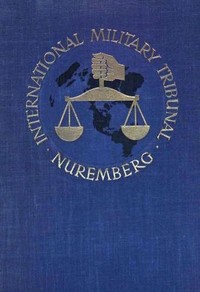
Trial of the major war criminals before the International Military Tribunal, Nuremburg, 14 November 1945-1 October 1946, volume 17
Written by Various
Chaptra reads alongside you — AI insights, chapter breakdowns and reader discussions for every book. Join free
About this book
Reading guide
Themes, characters and key ideas in Trial of the major war criminals before the International Military Tribunal, Nuremburg, 14 November 1945-1 October 1946, volume 17, written by Chaptra AI.
- about 20 hours
- advanced
- formal
- somber
- historical
Volume 17 of "Trial of the Major War Criminals Before the International Military Tribunal" meticulously documents the ongoing proceedings of the Nuremberg Trials, offering a firsthand account of the legal battle following World War II. This specific volume delves into the defense arguments presented by prominent Nazi military and political leaders, focusing particularly on the case of Konstantin von Neurath. It illuminates the intricate courtroom dynamics, showcasing the rigorous cross-examinations and the legal strategies employed to address charges of war crimes and crimes against humanity. The text provides invaluable insight into the establishment of international justice, reflecting on the profound challenges of accountability and the pursuit of truth in the aftermath of unprecedented global conflict.
“"The Tribunal wishes to clarify the precise nature of the administrative actions taken concerning the Czech population."”
Key themes
- Justice and Accountability
- This is the overarching theme, exploring the monumental effort to hold individuals accountable for state-sponsored atrocities after World War II. The volume meticulously documents the legal process designed to define, prosecute, and punish war crimes and crimes against humanity, establishing a precedent for international justice.
- The Nature of War Crimes and Aggression
- The proceedings in Volume 17, like the entire Nuremberg Trials, are fundamentally about defining and prosecuting actions previously considered within the sovereign rights of a state during wartime. It delves into the legal and moral distinctions between legitimate acts of war and criminal aggression, oppression, and genocide.
- Historical Memory and Truth
- The trial itself is an act of historical documentation, meticulously recording the events, decisions, and justifications of the Nazi regime. This volume contributes to building an undeniable record of the past, confronting denial, and ensuring that the atrocities committed are not forgotten or dismissed.
Worth discussing
To what extent can individuals be held responsible for crimes committed by a state or regime?
Chapter-by-chapter breakdowns, character arcs and the full thematic analysis come with a free account.
Discussions
No one has started one yet
Questions this book opens up
No discussions yet
Be the first to start a discussion about this book!
Sign up to start the discussionReviews
No reviews yet
Be the first to review this book!