
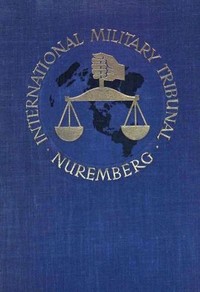
Trial of the Major War Criminals Before the International Military Tribunal, Nuremburg, 14 November 1945-1 October 1946, Volume 10
Written by Various
Chaptra reads alongside you — AI insights, chapter breakdowns and reader discussions for every book. Join free
About this book
Reading guide
Themes, characters and key ideas in Trial of the Major War Criminals Before the International Military Tribunal, Nuremburg, 14 November 1945-1 October 1946, Volume 10, written by Chaptra AI.
- about 30 hours
- advanced
- somber
- formal
- historical
Volume 10 of "Trial of the Major War Criminals Before the International Military Tribunal" meticulously documents a specific segment of the Nuremberg Trials, covering the morning sessions from March 25 to April 6, 1946. This historical compilation provides a verbatim account of legal proceedings, primarily focusing on the defense presentations for various high-ranking Nazi officials, including significant speeches and evidence offered by and on behalf of Rudolf Hess. As a foundational primary source, it illuminates the intricate legal strategies employed by the defense and the Tribunal's rigorous process in establishing accountability for the unprecedented atrocities of World War II. The volume serves as an indispensable record of the birth of international criminal law, capturing the complexities of adjudicating guilt on a global scale and setting a crucial precedent for future international justice. It underscores the monumental effort to formalize justice against state-sponsored crimes.
“The defendants are charged with crimes against humanity, crimes against peace, and war crimes. The evidence presented will demonstrate their individual culpability.”
Key themes
- Justice and Accountability
- The overarching theme of the Nuremberg Trials, and thus this volume, is the pursuit of justice for unprecedented crimes and the establishment of individual accountability for actions committed during wartime. The meticulous legal proceedings documented here illustrate the international community's struggle to define 'justice' in the face of genocide and aggression, and to hold high-ranking officials personally responsible.
- The Birth of International Law
- This volume documents a crucial phase in the creation and application of international criminal law. The trials established new legal categories like 'crimes against peace' and 'crimes against humanity' and affirmed the principle that individuals, not just states, can be held responsible under international law. The legal debates and procedural innovations recorded here lay the groundwork for future international legal frameworks.
- Historical Memory and Documentation
- Beyond legal adjudication, the trials served as a monumental effort to document and preserve the historical record of Nazi atrocities. Volume 10, as a direct transcript, functions as a primary source, ensuring that the evidence, testimonies, and arguments are preserved for posterity. It contributes to the collective memory of World War II, providing irrefutable evidence against revisionism and denial.
Worth discussing
To what extent did the Nuremberg Trials establish new international legal precedents, and how are these still relevant today?
Chapter-by-chapter breakdowns, character arcs and the full thematic analysis come with a free account.
Discussions
No one has started one yet
Questions this book opens up
No discussions yet
Be the first to start a discussion about this book!
Sign up to start the discussionReviews
No reviews yet
Be the first to review this book!