
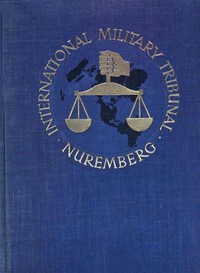
Trial of the Major War Criminals Before the International Military Tribunal, Nuremburg, 14 November 1945-1 October 1946, Volume 04
Written by Various
Chaptra reads alongside you — AI insights, chapter breakdowns and reader discussions for every book. Join free
About this book
Reading guide
Themes, characters and key ideas in Trial of the Major War Criminals Before the International Military Tribunal, Nuremburg, 14 November 1945-1 October 1946, Volume 04, written by Chaptra AI.
- about 8 hours
- advanced
- serious
- solemn
- historical
Volume 04 of "Trial of the Major War Criminals Before the International Military Tribunal" meticulously documents the official proceedings of the Nuremberg Trials from November 1945 to October 1946. This historical record details the Tribunal's methodical establishment of order, protocol, and rules for the prosecution of high-ranking Nazi officials for war crimes. It highlights the presiding judge, Lord Justice Sir Geoffrey Lawrence, as he navigates the complex legal landscape, addressing issues like defendant conduct and witness testimonies. The volume sets the stage for the presentation of overwhelming evidence, including plans for premeditated starvation and annexation related to the Soviet Union, underscoring the profound themes of justice, accountability, and the moral implications of immense human suffering in the wake of World War II.
“The Tribunal establishes order and outlines the protocol of the proceedings.”
Key themes
- Justice and Accountability
- The central theme of the entire Nuremberg Trials, this volume explicitly details the legal mechanisms and procedural integrity established to hold high-ranking officials accountable for unprecedented crimes. It explores the challenges and triumphs of imposing international justice.
- Historical Truth and Documentation
- The trials were not only about punishment but also about establishing an undeniable historical record of Nazi atrocities. This volume exemplifies how legal proceedings can serve as a powerful tool for truth-telling and memory preservation, countering denial and revisionism.
- The Nature of Evil and Moral Responsibility
- Through the charges and evidence presented, the volume implicitly explores the depths of human depravity and the moral breakdown that led to systematic atrocities. It confronts the question of individual responsibility within a state apparatus and the moral implications of actions that defy basic humanity.
Worth discussing
What are the lasting legal precedents established by the Nuremberg Trials, as evidenced in these proceedings?
Chapter-by-chapter breakdowns, character arcs and the full thematic analysis come with a free account.
Discussions
No one has started one yet
Questions this book opens up
No discussions yet
Be the first to start a discussion about this book!
Sign up to start the discussionReviews
No reviews yet
Be the first to review this book!