
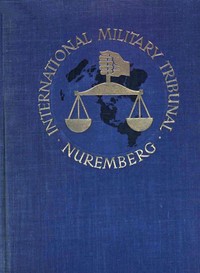
Trial of the Major War Criminals Before the International Military Tribunal, Nuremburg, 14 November 1945-1 October 1946, Volume 03
Written by Various
Chaptra reads alongside you — AI insights, chapter breakdowns and reader discussions for every book. Join free
About this book
Reading guide
Themes, characters and key ideas in Trial of the Major War Criminals Before the International Military Tribunal, Nuremburg, 14 November 1945-1 October 1946, Volume 03, written by Chaptra AI.
- about 8 hours
- advanced
- formal
- grave
- investigative
Volume 03 of "Trial of the Major War Criminals Before the International Military Tribunal" meticulously documents the early proceedings of the Nuremberg Trials, specifically from December 1 to December 14, 1945. This historical record focuses on the formal introduction to the trial process, the crucial examination of key witnesses and defendants like Rudolf Hess and Erwin Lahousen, and the legal arguments surrounding the defendants' capacity to stand trial. Through testimonies concerning war crimes against prisoners of war and other atrocities, the volume illuminates the complex legal and moral dimensions of wartime actions. It serves as a foundational document, outlining the nascent framework for international criminal law and setting a precedent for global accountability.
“The International Military Tribunal is now in session to consider the capacity of the defendant Rudolf Hess to stand trial.”
Key themes
- Justice and Accountability
- This is the overarching theme, as the entire tribunal is dedicated to bringing those responsible for the gravest crimes to justice. The volume details the legal mechanisms employed to hold high-ranking officials individually accountable for state actions, a groundbreaking concept at the time. It explores the challenges of defining and applying justice on an international scale.
- International Law and Sovereignty
- The Nuremberg Trials were a landmark event in the creation of international criminal law, challenging traditional notions of national sovereignty and immunity for state leaders. This volume details the practical application of new legal principles, such as crimes against peace, war crimes, and crimes against humanity, and the inherent tension between national legal systems and emerging global norms.
- War Crimes and Human Rights
- Central to the proceedings is the explicit detailing of atrocities committed during the war, particularly against prisoners of war, as highlighted by witness testimonies. The volume exposes the systematic nature of these violations, underscoring the importance of human rights even in times of conflict and laying the groundwork for future conventions protecting civilians and combatants.
Worth discussing
To what extent did the Nuremberg Trials establish a foundation for modern international criminal law, and what are its lingering limitations?
Chapter-by-chapter breakdowns, character arcs and the full thematic analysis come with a free account.
Discussions
No one has started one yet
Questions this book opens up
No discussions yet
Be the first to start a discussion about this book!
Sign up to start the discussionReviews
No reviews yet
Be the first to review this book!