
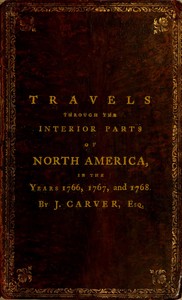
Travels Through the Interior Parts of North America, in the Years 1766, 1767 and 1768
Written by Jonathan Carver
Chaptra reads alongside you — AI insights, chapter breakdowns and reader discussions for every book. Join free
About this book
Reading guide
Themes, characters and key ideas in Travels Through the Interior Parts of North America, in the Years 1766, 1767 and 1768, written by Chaptra AI.
- about 12 hours
- intermediate
- Exploratory
- Historical
- Descriptive
Jonathan Carver's "Travels Through the Interior Parts of North America" is a seminal 18th-century account detailing his extensive explorations of the North American interior following the French and Indian War. The narrative blends personal adventure with meticulous observations of the land's geography, natural resources, and the customs of various indigenous tribes, particularly the Naudowessie and Chipéway. Driven by a desire to chart newly acquired British territories and assess their potential for settlement and exploitation, Carver traverses from Boston to the Great Lakes region, documenting his interactions and the challenges faced. The work stands as a crucial historical document, offering a Eurocentric perspective on the American wilderness and its native inhabitants, while also serving as an influential, though at times controversial, early travelogue.
“My views were not to explore a mine, or gain a private emolument, but to contribute to the knowledge of geography, and to acquire an insight into the customs, manners, and languages of the different tribes of Indians.”
Key themes
- Exploration and Discovery
- This is the foundational theme, driving Carver's entire journey. The book chronicles the physical act of traversing unknown territories, mapping new lands, and documenting previously unrecorded features. It embodies the human desire to push boundaries, understand the natural world, and expand the known geographical and scientific horizons.
- Colonialism and Empire
- The entire expedition is framed within the context of British imperial expansion following the French and Indian War. Carver's mission is explicitly tied to understanding the economic and strategic potential of newly acquired territories for future settlement and exploitation. This theme explores the motivations behind colonial ventures, the assertion of European power, and the viewing of lands and peoples through an imperial lens.
- Cultural Encounter and Representation
- Carver's interactions and observations of various Native American tribes are a central component of the book. This theme explores the dynamic of cross-cultural encounter, the challenges of understanding 'the other,' and the ways in which indigenous peoples were represented by European observers. It highlights the blend of curiosity, admiration, and inherent bias in such ethnographic accounts.
Worth discussing
How does Carver's stated purpose for his journey align with or diverge from the actual content and implications of his observations?
Chapter-by-chapter breakdowns, character arcs and the full thematic analysis come with a free account.
Discussions
No one has started one yet
Questions this book opens up
No discussions yet
Be the first to start a discussion about this book!
Sign up to start the discussionReviews
No reviews yet
Be the first to review this book!