
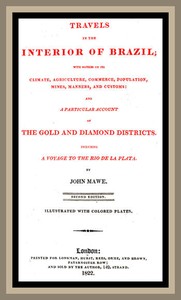
Travels in the interior of Brazil: with notices on its climate, agriculture, commerce, population, mines, manners, and customs: and a particular account of the gold and diamond districts.
Written by John Mawe
Chaptra reads alongside you — AI insights, chapter breakdowns and reader discussions for every book. Join free
About this book
Reading guide
Themes, characters and key ideas in Travels in the interior of Brazil: with notices on its climate, agriculture, commerce, population, mines, manners, and customs: and a particular account of the gold and diamond districts., written by Chaptra AI.
- about 18 hours
- advanced
- Exploratory
- Informative
- Historical
John Mawe's "Travels in the Interior of Brazil" is a foundational early 19th-century travelogue chronicling the author's extensive journeys through Brazil, with a particular focus on its rich mineral resources, especially the gold and diamond districts. The narrative begins with Mawe's harrowing experiences of imprisonment and political turmoil in the Rio de la Plata region, setting a tone of precariousness for foreign travelers. Beyond these initial challenges, the book meticulously details Brazil's climate, agriculture, commerce, population, and the societal nuances observed during his explorations. It serves as a vital historical document, offering a British perspective on a newly opening, resource-rich South American nation.
“The interior of Brazil, a land of untold riches, lay before me, demanding not only exploration but a careful assessment of its bounties.”
Key themes
- Exploration and Discovery
- This theme is central to the entire narrative, detailing Mawe's physical journeys into previously uncharted or little-known regions of Brazil. It encompasses not only geographical discovery but also the discovery of mineral wealth, agricultural potential, and the diverse cultures encountered. The book celebrates the spirit of adventure and the pursuit of knowledge about new lands.
- Colonialism and Resource Exploitation
- Mawe's travelogue is deeply embedded in the context of early 19th-century European colonial interests. The focus on gold and diamond districts, agriculture, and commerce highlights the imperial gaze towards Brazil as a source of raw materials and economic opportunity. The narrative subtly reveals the power dynamics between European powers and the colonized or newly independent nations, and the impact of resource extraction on the local environment and populace.
- Cultural Encounter and Observation
- Mawe's journey involves significant interaction with various social groups within Brazil, including Portuguese settlers, government officials, indigenous communities, and enslaved populations. The book provides a valuable, albeit Eurocentric, record of their customs, manners, and daily lives, offering insights into the social hierarchy and cultural diversity of the region during a transitional period. It highlights the challenges and fascinations of cross-cultural communication and understanding.
Worth discussing
How does Mawe's British perspective influence his observations of Brazilian society, resources, and politics?
Chapter-by-chapter breakdowns, character arcs and the full thematic analysis come with a free account.
Discussions
No one has started one yet
Questions this book opens up
No discussions yet
Be the first to start a discussion about this book!
Sign up to start the discussionReviews
No reviews yet
Be the first to review this book!