
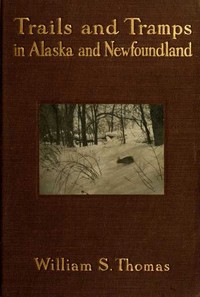
Trails and Tramps in Alaska and Newfoundland
Written by William S. Thomas
Chaptra reads alongside you — AI insights, chapter breakdowns and reader discussions for every book. Join free
About this book
Reading guide
Themes, characters and key ideas in Trails and Tramps in Alaska and Newfoundland, written by Chaptra AI.
- about 8 hours
- intermediate
- Adventurous
- Descriptive
- Reflective
William S. Thomas's "Trails and Tramps in Alaska and Newfoundland" is an early 20th-century travelogue chronicling the author's adventurous hunting and exploration expeditions across the wild landscapes of Alaska and Newfoundland. Blending vivid narratives of big game pursuits with rich descriptions of natural scenery and diverse wildlife, the book offers a deep appreciation for the untamed wilderness. The journey begins with poignant farewells and keen observations aboard a steamer bound for Alaska, setting a tone of adventure and human connection against a backdrop of vast, unexplored territories. Through Thomas's detailed accounts, readers gain insight into the era's spirit of exploration, the unique cultures encountered, and the breathtaking beauty of North America's remote frontiers.
“The poignant farewells of the young man, bound for the North, spoke volumes of the allure and the cost of adventure.”
Key themes
- The Spirit of Adventure and Exploration
- This theme is central to the entire narrative, driving Thomas's journeys to remote and challenging wildernesses. It explores the human impulse to venture into the unknown, seek out new experiences, and test one's limits against nature. The book captures the excitement, challenges, and rewards of early 20th-century exploration.
- Man's Relationship with the Wilderness
- Explored through Thomas's hunting expeditions and his profound descriptions of natural landscapes and wildlife. The theme encompasses both the utilitarian aspect of hunting (for sport or sustenance) and a deep, often spiritual, appreciation for the beauty, power, and solitude of untouched nature. It examines the intricate balance between human presence and the pristine environment.
- Observation and Descriptive Power
- As a travelogue, the book is fundamentally built upon Thomas's keen observational skills and his ability to translate sensory experiences into vivid descriptive prose. This theme highlights the author's role as a chronicler and artist, capturing the nuances of landscapes, wildlife, and human interactions, making the distant and wild accessible to the reader.
Worth discussing
How does Thomas portray the relationship between humans and the natural world, particularly through the lens of hunting?
Chapter-by-chapter breakdowns, character arcs and the full thematic analysis come with a free account.
Discussions
No one has started one yet
Questions this book opens up
No discussions yet
Be the first to start a discussion about this book!
Sign up to start the discussionReviews
No reviews yet
Be the first to review this book!