
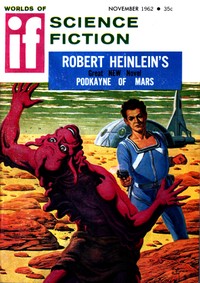
Too Many Eggs
Written by Kris Neville
Chaptra reads alongside you — AI insights, chapter breakdowns and reader discussions for every book. Join free
About this book
Reading guide
Themes, characters and key ideas in Too Many Eggs, written by Chaptra AI.
- about 1 hours
- intermediate
- whimsical
- humorous
- mysterious
Kris Melville's "Too Many Eggs" is a whimsical yet chilling science fiction short story from the early 1960s, exploring the absurd consequences of an unusual purchase. The protagonist, Coxe, buys a heavily discounted refrigerator that inexplicably begins producing an endless supply of fish eggs. Initially a humorous domestic challenge, Coxe and his girlfriend attempt to manage the growing bounty by distributing it among friends and family, indulging in the unexpected luxury. However, this seemingly benign situation takes a dark turn when a frantic individual confronts Coxe, revealing the true, horrific nature of the eggs and the devastating impact of his consumption, transforming the narrative into a biting commentary on consumerism and the unforeseen repercussions of desire.
“"It wasn't just a bargain; it was a phenomenon. A refrigerator that somehow... made caviar."”
Key themes
- Consumerism and Indulgence
- The story directly critiques the allure of consumerism, particularly the desire for 'bargains' and the unchecked indulgence in seemingly endless resources. Coxe's purchase of the discounted refrigerator and his subsequent enjoyment of its mysterious output highlights a societal tendency to consume without questioning the source or consequences.
- Unexpected Consequences
- The central dramatic tension of the story revolves around the unforeseen and horrific consequences of Coxe's seemingly innocuous actions. What begins as a whimsical domestic oddity quickly escalates into a global catastrophe, illustrating how individual indulgence can have far-reaching, devastating ripple effects.
- Desire and Fulfillment
- Coxe's initial desire for a bargain leads to an unexpected fulfillment of a different kind—an endless supply of a luxury item. However, this 'fulfillment' is revealed to be a horrifying curse, challenging the very nature of what it means to desire and to be satisfied. It questions whether true fulfillment can come from something obtained without understanding its true cost.
Worth discussing
How does the story use humor to set up its eventual dark twist? What effect does this contrast have on the reader?
Chapter-by-chapter breakdowns, character arcs and the full thematic analysis come with a free account.
Discussions
No one has started one yet
Questions this book opens up
No discussions yet
Be the first to start a discussion about this book!
Sign up to start the discussionReviews
No reviews yet
Be the first to review this book!