
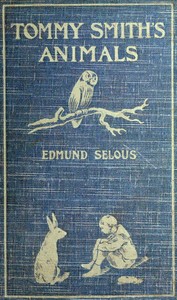
Tommy Smith's Animals
Written by Edmund Selous
Chaptra reads alongside you — AI insights, chapter breakdowns and reader discussions for every book. Join free
About this book
Reading guide
Themes, characters and key ideas in Tommy Smith's Animals, written by Chaptra AI.
- about 4 hours
- intermediate
- Didactic
- Uplifting
- Moral
Edmund Selous's "Tommy Smith's Animals" is a late 19th-century children's story that chronicles the moral transformation of a young boy, Tommy Smith, who initially mistreats animals. Through a series of encounters, talking animals—including an owl, hare, frog, and snake—impart lessons on kindness, empathy, and respect for nature. The narrative begins with an animal council deciding to educate rather than punish Tommy, setting the stage for his journey from cruelty to understanding. Each chapter serves as an episodic lesson, highlighting the importance of animal welfare and fostering a deeper connection between children and the natural world.
“"True kindness is understanding the feelings of others, even those who cannot speak your tongue."”
Key themes
- Empathy and Kindness
- The central theme of the book, explored through Tommy's journey from a lack of empathy to a profound understanding of animal feelings. The narrative explicitly teaches that true kindness extends to all living beings, requiring one to actively imagine and respond to the experiences of others.
- Respect for Nature and Animal Welfare
- The book advocates for a respectful relationship between humans and the natural world, emphasizing the inherent value of animals and their right to live undisturbed. It challenges the anthropocentric view that animals exist solely for human use or amusement.
- Moral Education and Transformation
- The narrative is fundamentally a story of moral growth and education. It explores how individuals can learn from their mistakes and undergo significant character development when exposed to different perspectives and guided by wisdom. Tommy's journey is a blueprint for childhood moral instruction.
Worth discussing
How does the book's portrayal of animals challenge traditional human-centric views of nature?
Chapter-by-chapter breakdowns, character arcs and the full thematic analysis come with a free account.
Discussions
No one has started one yet
Questions this book opens up
No discussions yet
Be the first to start a discussion about this book!
Sign up to start the discussionReviews
No reviews yet
Be the first to review this book!