
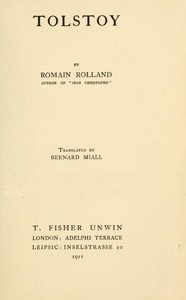
Tolstoy
Written by Romain Rolland
Chaptra reads alongside you — AI insights, chapter breakdowns and reader discussions for every book. Join free
About this book
Reading guide
Themes, characters and key ideas in Tolstoy, written by Chaptra AI.
- about 8 hours
- intermediate
- reverent
- analytical
- philosophical
Romain Rolland's "Tolstoy" is an early 20th-century literary biography that serves as a profound tribute to Leo Tolstoy, exploring his life, artistic evolution, and philosophical journey. The work emphasizes Tolstoy's immense impact on the intellectual landscape of his time, particularly in France, where his ideas resonated deeply with Rolland and his contemporaries. It traces Tolstoy's path as a towering figure of moral and spiritual inquiry, loved and debated, and delves into the transformative power of his literature on themes of mortality, brotherly love, and human disillusionment. Rolland's analysis highlights how Tolstoy's writings offered a sense of connection and revelation, establishing him as a crucial voice during a period of significant societal and intellectual change.
“"He was not a man, he was a world."”
Key themes
- Spiritual Quest and Moral Authenticity
- This theme explores Tolstoy's lifelong struggle to find genuine spiritual truth and live an authentic moral life, often in defiance of societal conventions and religious dogma. Rolland emphasizes Tolstoy's profound crisis of faith and his subsequent development of a radical, personal Christianity based on love, non-resistance, and simplicity, which became the driving force behind his later life and writings.
- The Role of Art and the Artist's Responsibility
- Rolland examines Tolstoy's evolving views on art, particularly his later conviction that art must serve a moral and spiritual purpose, rather than merely aesthetic pleasure. This theme highlights Tolstoy's own internal conflict as a celebrated artist who came to question the value of his own masterpieces if they did not align with his profound ethical beliefs.
- Social Impact and Intellectual Resonance
- Rolland highlights the immense and transformative impact Tolstoy's ideas and writings had on the intellectual society of his time, particularly in Europe. This theme focuses on how Tolstoy emerged as a 'towering figure' whose moral and spiritual inquiries deeply influenced, challenged, and divided his contemporaries.
Worth discussing
How does Rolland's personal admiration for Tolstoy shape the narrative and analysis in the biography?
Chapter-by-chapter breakdowns, character arcs and the full thematic analysis come with a free account.
Discussions
No one has started one yet
Questions this book opens up
No discussions yet
Be the first to start a discussion about this book!
Sign up to start the discussionReviews
No reviews yet
Be the first to review this book!