
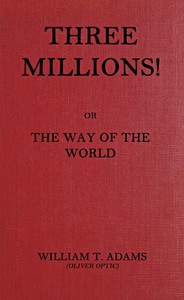
Three millions! : $b or, The way of the world
Written by Oliver Optic
Chaptra reads alongside you — AI insights, chapter breakdowns and reader discussions for every book. Join free
About this book
This work by Optic, Oliver offers readers a unique literary experience. The narrative explores themes of inheritance and succession and millionaires.
Reading guide
Themes, characters and key ideas in Three millions! : $b or, The way of the world, written by Chaptra AI.
- about 7 hours
- intermediate
- Moralistic
- Didactic
- Hopeful
Oliver Optic's "Three millions! : or, The way of the world" is a classic juvenile novel that explores the profound impact of sudden wealth on a young, virtuous protagonist. The story follows Frank Hunter, a hardworking but impoverished young man, who unexpectedly inherits a vast fortune. As he navigates the temptations and challenges that come with his new status, Frank must contend with avaricious relatives, false friends, and the moral dilemmas posed by immense wealth, ultimately learning valuable lessons about integrity, generosity, and the true meaning of success beyond mere riches. It's a didactic tale emphasizing character over circumstance.
“"It is not the amount of gold in one's coffers, but the integrity in one's heart, that truly enriches a man."”
Key themes
- Integrity and Moral Character
- Central to the novel is the idea that true worth lies in one's moral character, not in material possessions. Frank's journey is a validation of his inherent honesty and good nature, proving that these virtues are more valuable than any fortune.
- The Corrupting Power of Wealth
- The novel extensively explores how sudden wealth can attract superficiality, greed, and deception, testing the moral fiber of the protagonist. It shows how money can reveal the true character of individuals, both those who possess it and those who seek it from others.
- Social Responsibility of the Wealthy
- The book subtly champions the idea that immense wealth comes with a responsibility to society. Frank's evolution includes understanding that his fortune can be a tool for good, not merely for personal indulgence, reflecting 19th-century philanthropic ideals.
Worth discussing
How does Frank's character evolve from the beginning to the end of the novel? What specific events contribute to his growth?
Chapter-by-chapter breakdowns, character arcs and the full thematic analysis come with a free account.
Discussions
No one has started one yet
Questions this book opens up
No discussions yet
Be the first to start a discussion about this book!
Sign up to start the discussionReviews
No reviews yet
Be the first to review this book!