
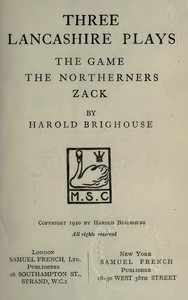
Three Lancashire Plays: The Game; The Northerners; Zack
Written by Harold Brighouse
Chaptra reads alongside you — AI insights, chapter breakdowns and reader discussions for every book. Join free
About this book
Reading guide
Themes, characters and key ideas in Three Lancashire Plays: The Game; The Northerners; Zack, written by Chaptra AI.
- about 8 hours
- intermediate
- humorous
- reflective
- dramatic
Harold Brighouse's "Three Lancashire Plays" offers a compelling glimpse into early 20th-century Northern English life, exploring the intricate dynamics of family, society, and individual ambition. The collection, featuring "The Game," "The Northerners," and "Zack," is particularly notable for its realistic portrayal of working-class and middle-class existence in Lancashire during a period of significant social change. "The Game" specifically delves into the cultural phenomenon of football, using a pivotal match and a star player's transfer as a catalyst to expose generational conflicts, differing notions of loyalty, and the pursuit of personal dreams against the backdrop of community identity. Brighouse masterfully weaves together humorous banter with underlying tensions, revealing deeper emotional currents related to love, family bonds, and the evolving roles within society. The plays collectively serve as a historical document, reflecting the values, struggles, and aspirations of a distinct regional culture.
“"It's more than just a game, Austin. It's the very heart of Blackton."”
Key themes
- Family Dynamics and Generational Conflict
- The plays deeply explore the relationships within the Whitworth family, highlighting the tensions and affections between parents and children, and siblings. This theme is particularly evident in the contrasting views on football and life aspirations, reflecting the broader societal shifts occurring between older, more traditional generations and younger, more individualistic ones.
- Loyalty vs. Ambition
- A central conflict, particularly in "The Game," is the struggle between loyalty to one's community, team, or family, and the pursuit of individual ambition or personal gain. Jack Metherell's transfer serves as a potent symbol for this dilemma, forcing characters to confront their own values regarding commitment versus self-interest.
- Identity and Personal Aspirations
- The plays explore how individuals define themselves within their community and family, and how personal dreams, whether artistic, professional, or romantic, can either align with or challenge established social norms. Characters grapple with who they are versus who they are expected to be.
Worth discussing
How does Brighouse use the sport of football in "The Game" as a metaphor for broader societal changes and individual aspirations?
Chapter-by-chapter breakdowns, character arcs and the full thematic analysis come with a free account.
Discussions
No one has started one yet
Questions this book opens up
No discussions yet
Be the first to start a discussion about this book!
Sign up to start the discussionReviews
No reviews yet
Be the first to review this book!