
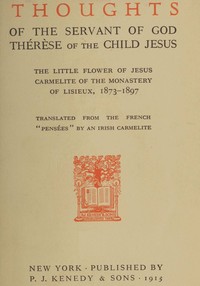
Thoughts of the servant of God, Thérèse of the Child Jesus : $b The little flower of Jesus, Carmelite of the monastery of Lisieux, 1873-1897
Written by de Lisieux Thérèse
Chaptra reads alongside you — AI insights, chapter breakdowns and reader discussions for every book. Join free
About this book
Reading guide
Themes, characters and key ideas in Thoughts of the servant of God, Thérèse of the Child Jesus : $b The little flower of Jesus, Carmelite of the monastery of Lisieux, 1873-1897, written by Chaptra AI.
- about 8 hours
- intermediate
- uplifting
- contemplative
- devotional
"Thoughts of the Servant of God, Thérèse of the Child Jesus: The Little Flower" is a profound collection of spiritual reflections that distills the core tenets of Thérèse's "Little Way" – a path to sanctity through small, daily acts of love and trust in God's mercy. This intimate work reveals the Carmelite nun's deep desire for divine love, her embrace of spiritual childhood, and her conviction that extraordinary holiness is attainable through ordinary means. The text emphasizes humility, self-effacement, and the transformation of suffering into 'little flowers' offered to God, presenting a joyful and accessible spirituality. It serves as a spiritual guide, inviting readers into a deeper relationship with God through simplicity and heartfelt devotion.
“My path is the path of spiritual childhood, the path of trust and absolute surrender.”
Key themes
- The 'Little Way' / Spiritual Childhood
- This central theme encapsulates Thérèse's unique spiritual doctrine, advocating a path to holiness through small, humble acts of love and trust, performed with a childlike dependence on God. It involves recognizing one's spiritual littleness and relying entirely on God's mercy and grace, rather than on heroic efforts or grand asceticisms. It's a way of embracing one's imperfections and offering them to God with confidence.
- Divine Love and Mercy
- Thérèse's spirituality is deeply rooted in her profound understanding of God's boundless love and infinite mercy. She believed that God's love is primarily merciful, forgiving human weaknesses and eagerly desiring to embrace even the smallest expressions of love. This theme permeates her writings, providing a hopeful and comforting vision of God as a tender Father or a loving Spouse, rather than a stern judge.
- Humility and Self-Effacement
- Thérèse views humility as a fundamental virtue, not as self-abasement, but as a truthful recognition of one's dependence on God and one's inherent littleness. She finds joy in being 'small' and hidden, believing that God delights in lifting up the humble. This theme encourages detachment from worldly honors, pride, and self-sufficiency, leading to inner peace and greater openness to divine grace.
Worth discussing
How does Thérèse's 'Little Way' challenge or affirm your understanding of spiritual growth and holiness?
Chapter-by-chapter breakdowns, character arcs and the full thematic analysis come with a free account.
Discussions
No one has started one yet
Questions this book opens up
No discussions yet
Be the first to start a discussion about this book!
Sign up to start the discussionReviews
No reviews yet
Be the first to review this book!