
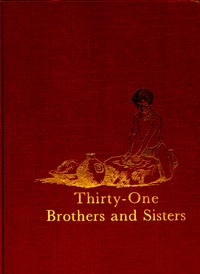
Thirty-one brothers and sisters
Written by Reba Paeff Mirsky
Chaptra reads alongside you — AI insights, chapter breakdowns and reader discussions for every book. Join free
About this book
Reading guide
Themes, characters and key ideas in Thirty-one brothers and sisters, written by Chaptra AI.
- about 8 hours
- intermediate
- adventurous
- cultural
- thought-provoking
Reba Paeff Mirsky's "Thirty-One Brothers and Sisters" is a children's novel from the 1950s that introduces readers to Nomusa, the spirited daughter of a Zulu chief, who yearns for adventure beyond the traditional domestic sphere assigned to girls. Despite her affection for her numerous siblings and her duties, Nomusa longs to participate in the thrilling annual elephant hunt, a pursuit reserved for boys and men. Her journey explores themes of bravery, gender roles, and the complexities of family dynamics within the rich tapestry of Zulu culture. A pivotal moment involving a wild boar highlights Nomusa's courage, emboldening her to challenge her father's expectations and seek recognition for her adventurous spirit and desire for independence.
“Why must girls always stay by the fire when the world calls to the boys with the scent of adventure?”
Key themes
- Gender Roles and Expectations
- This is the central theme, exploring the societal norms that dictate what activities are appropriate for boys and girls within Zulu culture. Nomusa's struggle directly challenges these deeply ingrained expectations, particularly the idea that girls are confined to domestic work while boys engage in adventurous pursuits like hunting. The theme questions the limitations placed on individuals based on gender and highlights the desire for self-determination.
- Bravery and Courage
- The theme of bravery is explored through Nomusa's actions and her internal resolve. It's not just about physical courage in the face of danger, but also the moral courage to challenge authority and long-held traditions. Her encounter with the wild boar serves as a literal demonstration of her bravery, which then empowers her to exhibit courage in standing up to her father and advocating for her desires.
- Family Dynamics and Duty
- The book delves into the intricate relationships within Nomusa's large family, particularly her bond with her many siblings and her relationship with her parents. It highlights the concept of duty within a communal society and the expectations placed on children, especially the eldest. Nomusa's affection for her siblings is clear, yet her personal desires create tension with her filial duties and her father's authority, illustrating the complexities of balancing individual ambition with family and cultural obligations.
Worth discussing
How do Nomusa's desires challenge the traditional expectations of her Zulu culture? Are these challenges unique to her culture, or are they universal?
Chapter-by-chapter breakdowns, character arcs and the full thematic analysis come with a free account.
Discussions
No one has started one yet
Questions this book opens up
No discussions yet
Be the first to start a discussion about this book!
Sign up to start the discussionReviews
No reviews yet
Be the first to review this book!